Blog

  • Biophilic Interior Design: Easy Ways to Bring Nature Indoors

    Biophilic Interior Design: Easy Ways to Bring Nature Indoors

    Biophilic interior design is more than just decorating with plants. It is a design approach that connects people with nature through natural light, organic materials, greenery, earthy colors, fresh airflow, and calming layouts. The goal is simple: create indoor spaces that feel healthier, more peaceful, and more connected to the outdoors.

    In recent years, biophilic design has become one of the biggest interior design trends in the United States — and for good reason. People are spending more time indoors than ever before, and many homeowners want spaces that reduce stress while improving comfort and well-being.

    Design publications like House Beautiful have highlighted how biophilic interiors can make homes feel more relaxing, stylish, and functional. But you do not need a luxury home or a massive renovation budget to make this style work.

    In this guide, we’ll explore practical and creative ways to use biophilic interior design in everyday homes while keeping the space modern, cozy, and livable.

    What Is Biophilic Interior Design?

    Biophilic interior design is a style that intentionally incorporates elements of nature into indoor spaces.

    The word “biophilia” literally means “love of nature.” In design, it refers to creating environments that strengthen the human connection with the natural world.

    This can include:

    • Indoor plants
    • Natural sunlight
    • Wood and stone materials
    • Water features
    • Earth-inspired colors
    • Organic shapes and textures
    • Better airflow and ventilation
    • Views of outdoor spaces

    The idea is not to turn your living room into a jungle. Instead, biophilic design focuses on balance and creating spaces that feel calm, grounded, and naturally inviting.

    Why Biophilic Design Is So Popular Right Now

    Modern life often feels overstimulating.

    Screens, artificial lighting, busy schedules, and crowded cities can leave people mentally exhausted. Biophilic design offers a softer, calmer alternative.

    Research has shown that nature-inspired environments may help reduce stress, improve focus, and support emotional well-being. That is one reason offices, hotels, restaurants, and homes are increasingly embracing natural design concepts.

    But honestly, you do not need scientific studies to feel the difference. A bright room filled with natural light, greenery, and warm wood tones simply feels better to be in.

    Start With Natural Light
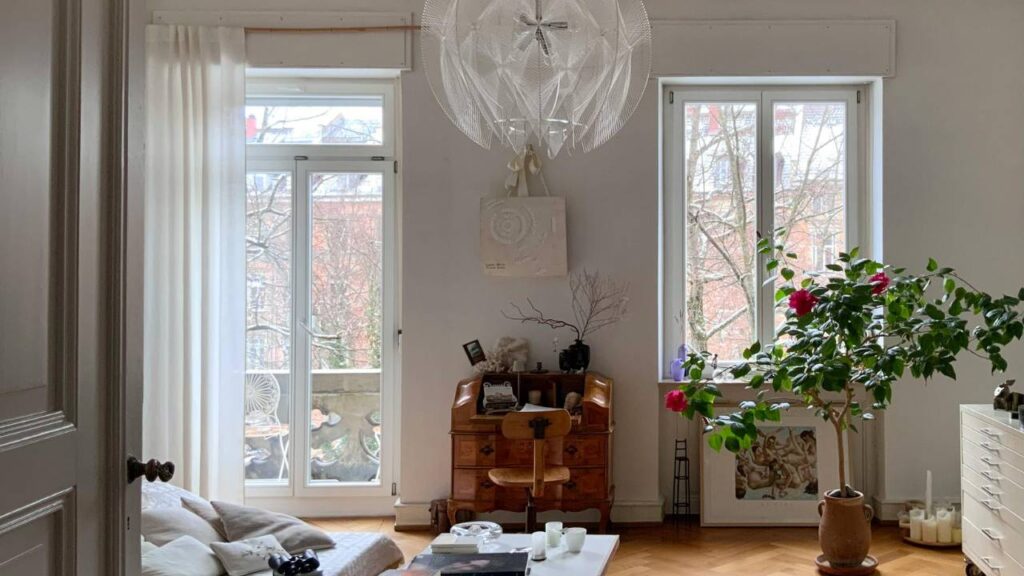
    Start With Natural Light

    Natural light is one of the most important elements of biophilic interior design.

    A dark, enclosed room rarely feels connected to nature. Maximizing sunlight instantly makes spaces feel fresher and more open.

    Here are a few easy ways to improve natural light indoors:

    • Use sheer curtains instead of heavy drapes
    • Keep windows uncluttered
    • Add mirrors to reflect sunlight
    • Choose lighter wall colors
    • Rearrange furniture that blocks windows
    • Install larger windows if renovating

    Even small adjustments can dramatically change the mood of a room.

    Personally, I think natural light is the fastest way to make a home feel expensive and peaceful at the same time.

    Decorate With Indoor Plants
    Decorate With Indoor Plants

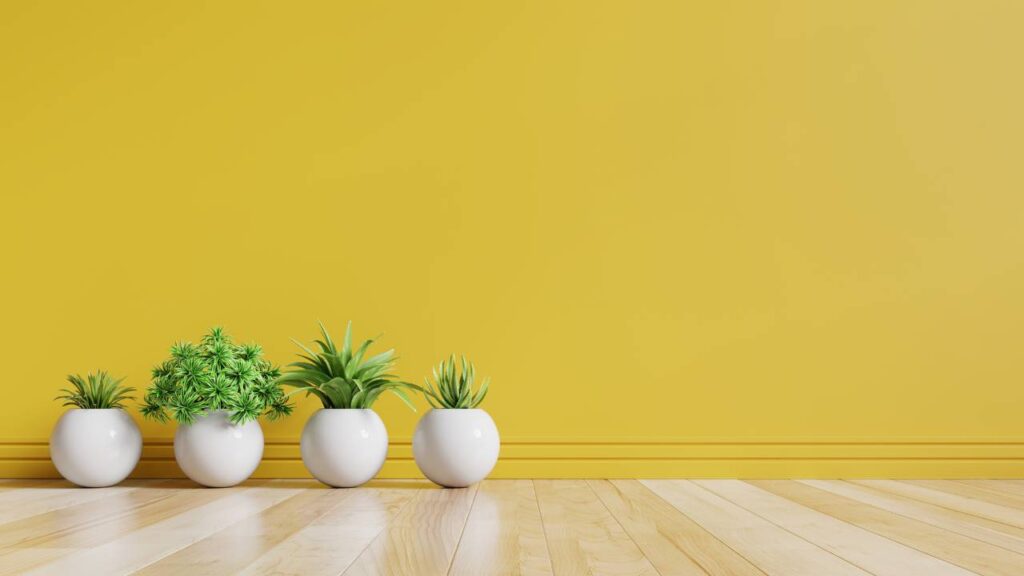
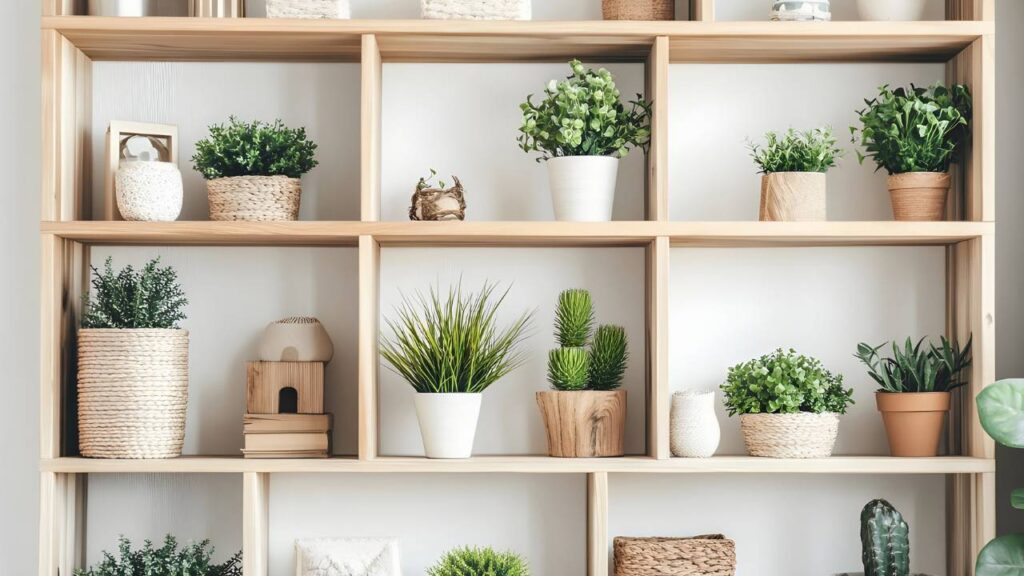
    Plants are often the first thing people think about when they hear “biophilic design” — and yes, they matter.

    Indoor plants bring movement, color, texture, and life into a space. They also soften hard architectural lines and help rooms feel more organic.

    Some of the best indoor plants for beginners include:

    Snake Plants

    Low-maintenance and stylish, snake plants work well in bedrooms and living rooms.

    Pothos

    Pothos vines are incredibly easy to grow and look beautiful on shelves or hanging planters.

    Monstera Plants

    Monstera leaves instantly create a tropical, modern look.

    Peace Lilies

    These plants add elegance while thriving in lower-light environments.

    Rubber Plants

    Rubber plants work wonderfully as statement greenery in corners or entryways.

    If you are not great at keeping plants alive, do not panic. Even a few high-quality faux plants can still help create a softer, nature-inspired atmosphere.

    Use Natural Materials Throughout the Home

    Biophilic interiors often feature materials that feel raw, textured, and authentic.

    Instead of glossy synthetic finishes everywhere, focus on natural surfaces like:

    • Wood
    • Stone
    • Rattan
    • Bamboo
    • Linen
    • Cotton
    • Clay
    • Cork
    • Leather
    • Jute

    These materials create warmth and tactile comfort.

    For example, a wooden dining table paired with linen chairs instantly feels more grounded and inviting than ultra-glossy plastic furniture.

    One thing I love about natural materials is that they age beautifully. Small imperfections often make them feel even more charming over time.

    Choose Earth-Inspired Colors
    Choose Earth-Inspired Colors

    Color plays a huge role in biophilic interior design.

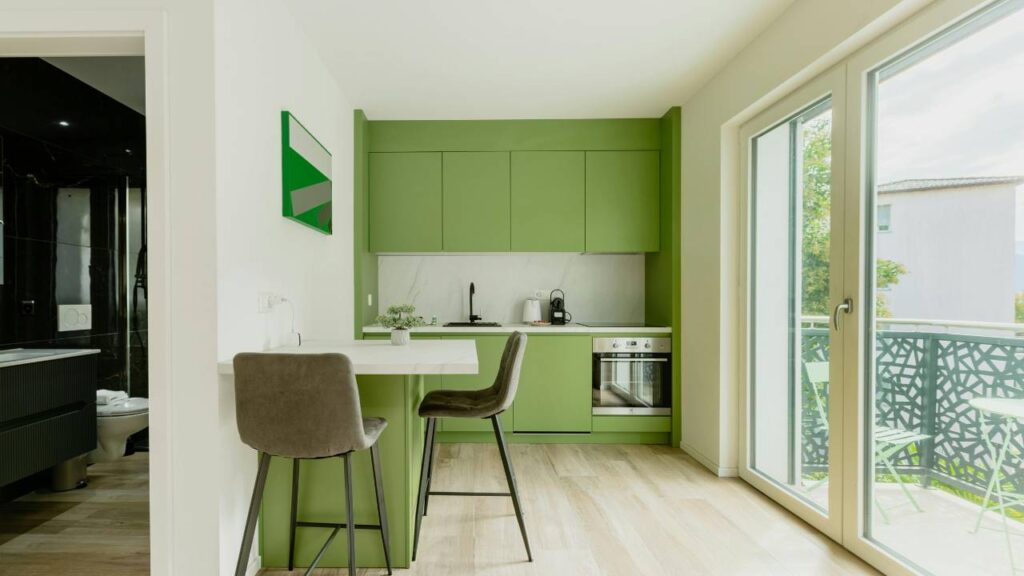
    Nature-inspired palettes help create calming, balanced interiors that feel connected to the outdoors.

    Popular biophilic color choices include:

    • Sage green
    • Olive green
    • Warm beige
    • Sand tones
    • Terracotta
    • Soft browns
    • Clay colors
    • Muted blues
    • Creamy whites

    These shades work beautifully together because they naturally exist in outdoor environments.

    You do not need to paint every wall green to embrace biophilic design. Even small accents like pillows, rugs, artwork, or ceramics can introduce earthy tones subtly.

    Add Organic Shapes and Curves

    Add Organic Shapes and Curves

    Nature rarely creates perfectly straight lines.

    That is why biophilic interiors often include softer, more organic shapes rather than harsh geometric designs.

    You can incorporate this through:

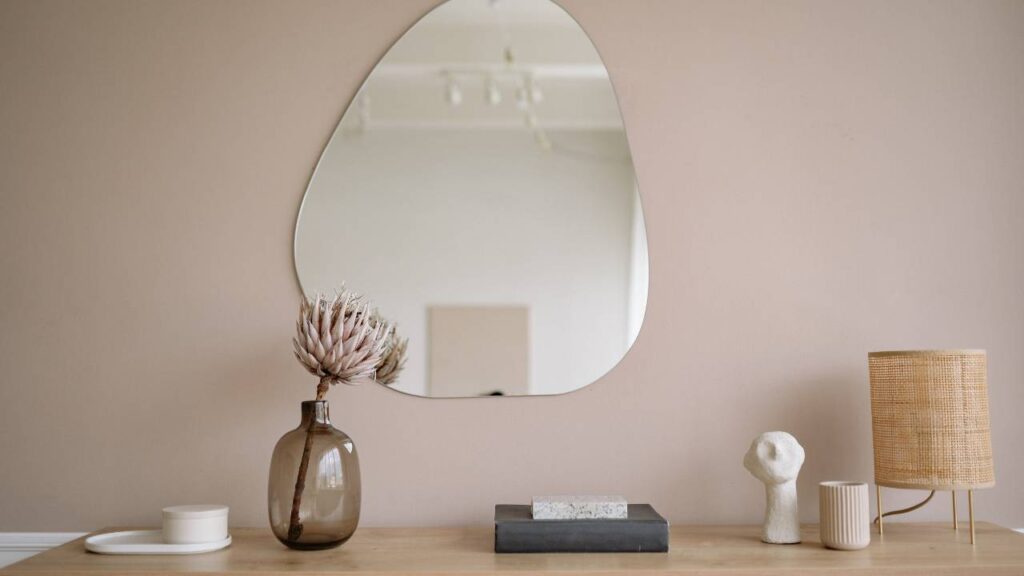
    • Rounded mirrors
    • Curved sofas
    • Arched doorways
    • Circular coffee tables
    • Flowing furniture silhouettes
    • Handmade ceramics
    • Wavy decor accents

    Curved shapes create a more relaxed and approachable atmosphere.

    This trend has become especially popular in modern interior design because it softens minimalist spaces without adding clutter.

    Create Better Airflow and Ventilation

    Create Better Airflow and Ventilation

    Fresh air is another important aspect of biophilic living.

    Whenever possible, open windows regularly to improve airflow and bring outdoor freshness inside.

    You can also improve indoor air quality by:

    • Using air-purifying plants
    • Avoiding overcrowded rooms
    • Choosing breathable fabrics
    • Using ceiling fans
    • Reducing heavy synthetic materials

    A home that feels fresh physically often feels calmer mentally too.

    Bring Nature Into Every Room

    One mistake people make is limiting biophilic design to the living room.

    In reality, every room can benefit from natural elements.

    Biophilic Bedroom Ideas

    Bedrooms should feel peaceful and restorative.

    Try:

    • Linen bedding
    • Wooden nightstands
    • Soft earthy tones
    • Minimal clutter
    • Nature-inspired artwork
    • Large plants near windows

    Biophilic Bathroom Ideas

    Bathrooms are perfect for spa-inspired natural design.

    Add:

    • Stone textures
    • Bamboo accessories
    • Eucalyptus bundles
    • Soft lighting
    • Wooden shelving
    • Neutral towels

    Biophilic Kitchen Ideas

    Kitchens often feel overly sterile, so natural elements help warm them up.

    Consider:

    • Wooden cutting boards
    • Herb gardens
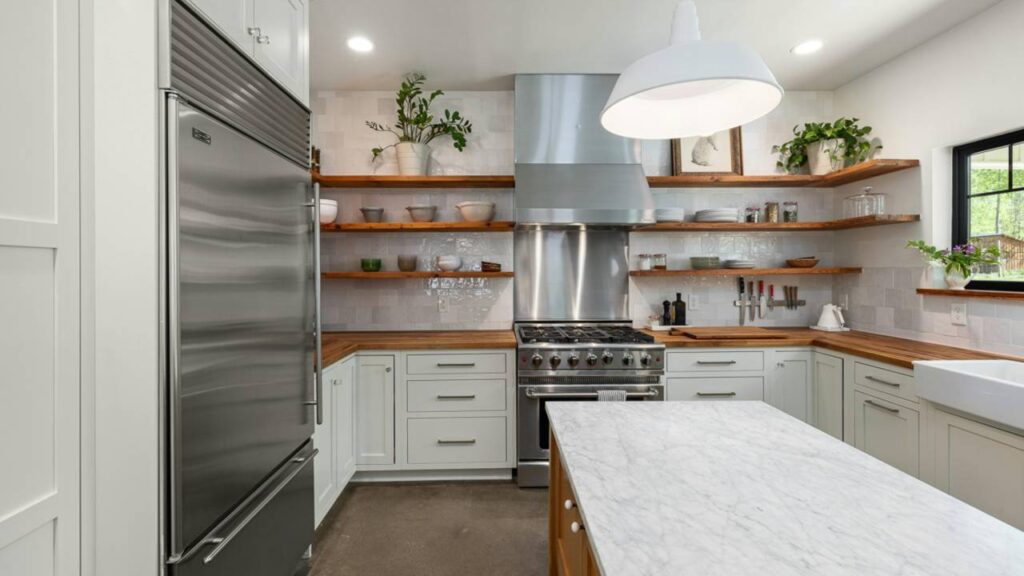
    • Open wood shelving
    • Ceramic dishes
    • Natural stone countertops
    • Earth-toned decor

    Use Water Elements Carefully
    Use Water Elements Carefully

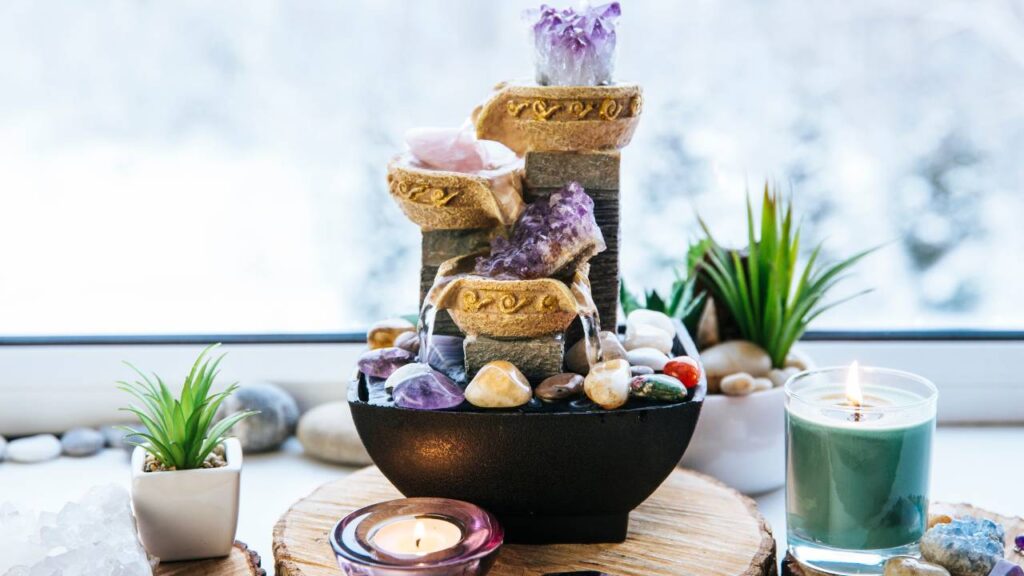
    Water is another core element of nature-inspired design.

    You do not need an indoor waterfall to embrace this concept.

    Small additions can work beautifully, including:

    • Tabletop fountains
    • Aquariums
    • Water-inspired artwork
    • Soft blue accents
    • Gentle sound machines

    The goal is to create a calming sensory experience rather than overwhelming the room.

    Reduce Visual Clutter

    Biophilic spaces often feel calm because they are intentional.

    Too much clutter disrupts that peaceful connection with nature.

    Before buying new decor, simplify what you already have.

    Focus on:

    • Clean surfaces
    • Organized shelves
    • Open walkways
    • Purposeful decor choices
    • Comfortable layouts

    Nature itself rarely feels chaotic in the way cluttered homes sometimes do.

    A simpler room usually feels more breathable and relaxing.

    Mix Modern Style With Natural Warmth
    Mix Modern Style With Natural Warmth

    One reason biophilic interior design works so well is because it blends beautifully with other styles.

    You can combine it with:

    • Scandinavian design
    • Modern minimalism
    • Japandi interiors
    • Rustic decor
    • Contemporary homes
    • Coastal aesthetics

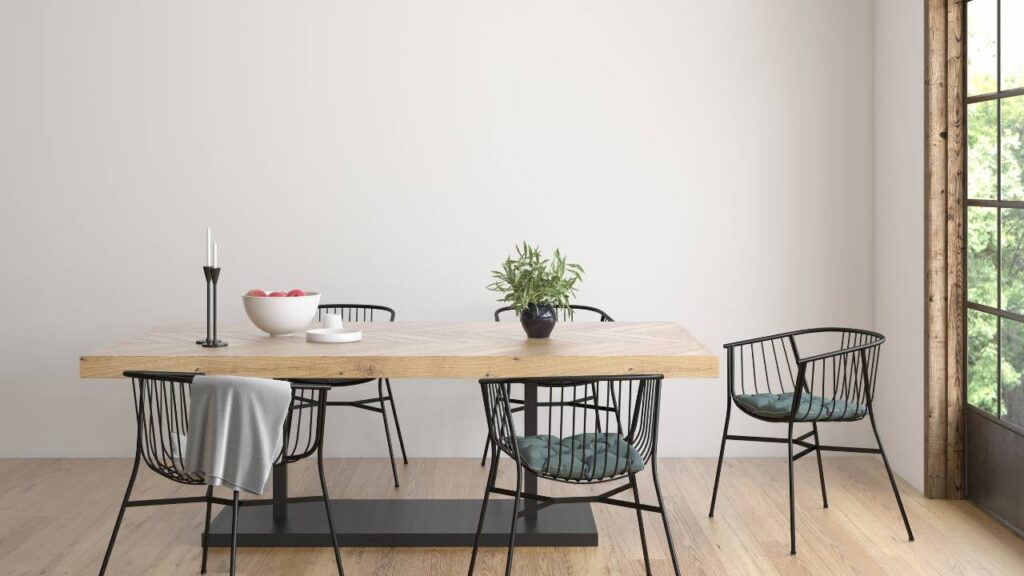
    For example, a sleek modern living room can feel far more welcoming when layered with wood textures, greenery, and soft natural fabrics.

    Biophilic design is not about abandoning modern style — it is about humanizing it.

    Budget-Friendly Biophilic Design Ideas

    You do not need an expensive renovation to make your home feel more connected to nature.

    Here are some affordable ideas:

    • Add a few indoor plants
    • Rearrange furniture near windows
    • Use woven baskets for storage
    • Swap synthetic fabrics for cotton or linen
    • Decorate with branches or dried flowers
    • Add earthy-colored pillows
    • Use wooden trays and bowls
    • Display nature photography

    Sometimes even tiny changes create a surprisingly big impact.

    Common Mistakes to Avoid

    While biophilic design is flexible, there are a few common mistakes people make.

    Overcrowding With Plants

    Too many plants can make rooms feel messy rather than peaceful.

    Ignoring Lighting

    Plants and natural materials lose their impact in poorly lit spaces.

    Using Too Many Artificial Materials

    Plastic-heavy decor often clashes with the calming aesthetic of biophilic interiors.

    Following Trends Too Closely

    The best biophilic spaces feel personal and livable — not staged for social media.

    Final Thoughts

    Biophilic interior design is not just a trend. It reflects a growing desire for homes that feel healthier, calmer, and more emotionally comforting.

    The beauty of this design style is that it works in almost any home. You do not need a giant house, expensive furniture, or a professional designer to create a nature-inspired space. A few thoughtful choices — better lighting, natural textures, greenery, and calming colors — can completely shift the feeling of a room.

    At its core, biophilic design reminds us that humans naturally crave connection with the outdoors, even when we are inside.

    Now here’s a simple question for you: What natural element would make your home feel more peaceful right now?


  • Best Home Decor Ideas to Refresh Your Space in 2026

    Best Home Decor Ideas to Refresh Your Space in 2026

    Your home should feel like a place you actually want to spend time in. The good news? You do not need a massive renovation budget or a professional interior designer to make your space look beautiful. Some of the best home decor ideas are surprisingly simple — rearranging furniture, adding texture, improving lighting, or bringing in natural elements can completely transform a room.

    Whether you live in a small apartment, a suburban home, or a city loft, smart decorating choices can make your space feel warmer, brighter, and more personalized. In this guide, we’ll explore practical and stylish home decor ideas that work for real homes and real budgets.

    Many modern decorating trends focus on comfort, personality, and functionality rather than perfection. Publications like House Beautiful and Architectural Digest India often highlight easy upgrades that create a big visual impact without overwhelming the space. This article takes inspiration from those ideas while expanding them into a more practical, in-depth guide for everyday homeowners.

    Start With a Neutral Foundation

    Start With a Neutral Foundation

    One of the easiest ways to create a timeless home is by starting with a neutral base.

    Neutral walls, rugs, and larger furniture pieces give you flexibility. Shades like white, beige, taupe, soft gray, or warm cream make rooms feel open and airy while allowing smaller decor items to stand out.

    That does not mean your home has to feel boring. A neutral foundation actually gives you more freedom to experiment with seasonal decor, colorful pillows, artwork, or accent furniture later.

    If you like changing styles often, this approach saves money over time because you are not constantly replacing expensive items.

    Upgrade Your Lighting

    Upgrade Your Lighting

    Lighting can completely change the mood of a room.

    Many homes rely too heavily on harsh overhead lighting, which often makes spaces feel cold and flat. Instead, layer different types of lighting throughout your home.

    Here are a few ideas:

    • Add floor lamps in dark corners
    • Use warm-toned bulbs instead of cool white bulbs
    • Install dimmers when possible
    • Place table lamps on side tables or consoles
    • Use LED candles for a cozy atmosphere
    • Hang pendant lights over dining tables or kitchen islands

    Natural light matters too. Avoid blocking windows with heavy curtains if you want rooms to feel larger and brighter.

    A well-lit room instantly feels more expensive and welcoming.

    Add Texture for a Designer Look

    Add Texture for a Designer Look

    Professional-looking interiors almost always include layered textures.

    Texture gives a room depth and warmth, even when the color palette is simple.

    You can add texture through:

    • Chunky knit blankets
    • Linen curtains
    • Woven baskets
    • Velvet pillows
    • Wood furniture
    • Jute rugs
    • Ceramic vases
    • Leather accents

    Mixing soft and hard materials creates visual balance. For example, pairing a sleek leather couch with soft cotton throws makes a living room feel more inviting.

    This is one of those home decor ideas that looks subtle but makes a huge difference.

    Decorate With Plants

    Decorate With Plants

    Indoor plants instantly make a home feel alive.

    Even a simple snake plant or pothos vine can brighten up a room and improve its overall atmosphere. If you are nervous about plant care, start with low-maintenance options.

    Popular beginner-friendly indoor plants include:

    • Snake plants
    • ZZ plants
    • Pothos
    • Spider plants
    • Peace lilies
    • Rubber plants

    Larger plants can fill awkward empty corners, while smaller plants work beautifully on shelves, coffee tables, or kitchen counters.

    If real plants are not practical for your lifestyle, high-quality faux greenery can still soften a space and add color.

    Use Mirrors to Make Rooms Feel Bigger

    Use Mirrors to Make Rooms Feel Bigger

    Mirrors are one of the oldest interior design tricks for a reason.

    A well-placed mirror reflects light and creates the illusion of more space. This is especially useful in smaller homes or apartments.

    Some smart mirror placement ideas include:

    • Across from a window to reflect sunlight
    • Above a fireplace
    • In narrow hallways
    • Behind dining tables
    • Near entryways

    Large statement mirrors can also act as artwork while serving a functional purpose.

    Create a Cozy Living Room

    Create a Cozy Living Room

    The living room is often the heart of the home, so it deserves extra attention.

    Instead of overcrowding the room with furniture, focus on comfort and flow. People should be able to move around easily without the room feeling empty.

    A cozy living room often includes:

    Comfortable Seating

    Choose furniture that looks good but also feels good. Oversized chairs, deep couches, and soft fabrics help create a relaxed atmosphere.

    Layered Throw Pillows

    Mix different pillow sizes and textures for a collected, designer-inspired look.

    Area Rugs

    Rugs help define spaces and make rooms feel grounded. Ideally, at least the front legs of your furniture should sit on the rug.

    Personal Touches

    Display books, family photos, travel souvenirs, or meaningful artwork to make the space feel personal rather than staged.

    Refresh Your Bedroom Without Renovating

    You do not need a full makeover to improve your bedroom.

    In fact, small updates often make the biggest impact.

    Here are some easy bedroom decor ideas:

    • Upgrade bedding with layered sheets and textured blankets
    • Add matching bedside lamps
    • Use blackout curtains for a hotel-style feel
    • Incorporate calming colors like sage green or soft blue
    • Hang oversized artwork above the bed
    • Replace cluttered furniture with cleaner, minimal pieces

    One simple trick I personally love is using oversized pillows and crisp bedding. It instantly makes a bedroom feel more luxurious.

    Make Small Spaces Work Smarter

    Small homes can still look stylish and spacious.

    The key is choosing decor that serves both form and function.

    Use Multi-Functional Furniture

    Storage ottomans, nesting tables, and beds with built-in drawers help maximize space.

    Go Vertical

    Tall shelves and wall-mounted storage keep floors clear while adding visual interest.

    Keep Colors Light

    Lighter shades make compact rooms feel larger and more open.

    Avoid Overdecorating

    Too many decorative items can quickly make small spaces feel cluttered.

    Minimal does not mean empty — it means intentional.

    Add Personality Through Wall Decor

    Blank walls can make a home feel unfinished.

    Instead of randomly hanging artwork, think about creating a cohesive visual story.

    Some popular wall decor ideas include:

    • Gallery walls
    • Framed photography
    • Floating shelves
    • Oversized abstract art
    • Vintage-inspired prints
    • Decorative wall molding
    • Statement clocks

    When arranging gallery walls, lay everything out on the floor first before hanging anything. This helps avoid unnecessary nail holes and awkward spacing.

    Bring Warmth Into the Kitchen

    Bring Warmth Into the Kitchen

    Kitchens are often designed for function, but decor can make them feel more welcoming too.

    Simple kitchen decorating ideas include:

    • Displaying wooden cutting boards
    • Adding open shelving
    • Using stylish storage jars
    • Hanging pendant lighting
    • Incorporating bar stools with texture
    • Decorating with fresh fruit bowls or herbs

    Even replacing cabinet hardware can dramatically change the overall appearance of a kitchen without a major remodel.

    Use Seasonal Decor Without Overdoing It

    Seasonal decorating can make your home feel fresh throughout the year.

    The trick is subtlety.

    Instead of completely redecorating every season, swap out smaller items like:

    • Throw pillows
    • Blankets
    • Candles
    • Table centerpieces
    • Wreaths
    • Flowers

    For example, warm earth tones work beautifully during fall, while lighter fabrics and greenery feel perfect for spring.

    This approach keeps your home feeling updated without becoming overwhelming.

    Declutter Before You Decorate

    One of the most overlooked home decor ideas is simply removing unnecessary items.

    Clutter can make even beautiful spaces feel chaotic.

    Before buying new decor, take time to:

    • Remove items you no longer use
    • Organize visible surfaces
    • Store seasonal clutter
    • Simplify overcrowded shelves

    Often, a cleaner room automatically looks more stylish without spending a single dollar.

    Mix Old and New Pieces

    Homes feel more authentic when they include a combination of styles.

    If everything comes from the same store collection, spaces can sometimes feel too staged or impersonal.

    Try mixing:

    • Modern furniture with vintage decor
    • Antique wood pieces with minimalist lighting
    • Contemporary artwork with traditional accents

    This layered look adds character and makes a home feel thoughtfully curated over time.

    Focus on Comfort, Not Perfection

    One mistake many people make is trying to create a “Pinterest-perfect” home that does not actually feel livable.

    The best interiors balance style and comfort.

    A beautiful home should still feel relaxing, functional, and personal. If a room looks amazing but nobody wants to sit there, something is missing.

    Decorating should reflect how you live, not just what photographs well online.

    Budget-Friendly Home Decor Ideas

    You do not need a luxury budget to improve your home.

    Some affordable decorating ideas include:

    • Rearranging existing furniture
    • Painting walls
    • Thrifting vintage decor
    • Updating pillow covers
    • DIY artwork
    • Swapping cabinet handles
    • Adding peel-and-stick wallpaper
    • Styling bookshelves differently

    Sometimes the most effective changes cost very little.

    Creativity matters more than price tags.

    Final Thoughts

    The best home decor ideas are the ones that make your space feel more like you. Whether you prefer modern minimalism, cozy farmhouse style, Scandinavian simplicity, or eclectic decor, the goal is the same: creating a home that feels comfortable, functional, and welcoming.

    You do not need to copy every trend you see online. Start small. Improve one room at a time. Add pieces you genuinely love. Over time, those thoughtful choices create a home with personality and warmth.

    Now here’s a simple question for you: Which room in your home would you love to transform first?

  • 143 kg to Pounds – Exact Conversion, Formula & Guide

    143 kg to Pounds – Exact Conversion, Formula & Guide

    If you want the quick answer:
    143 kg = 315.26 pounds (lbs)

    That’s the exact conversion rounded to two decimal places. In everyday use, people usually round it to 315.3 lbs.

    But if you want to understand how the conversion works, why kilograms and pounds are different, and how to convert values yourself quickly, this guide will walk you through everything step by step.

    What Does 143 kg Mean in Pounds?

    When converting 143 kilograms (kg) to pounds (lbs), you’re switching between two measurement systems:

    • Kilograms (kg) → metric system
    • Pounds (lbs) → imperial/U.S. customary system

    Both units measure mass (or body weight in everyday language), but they use different scales.

    So this conversion simply translates a metric weight into the measurement system commonly used in the United States.

    The Formula to Convert Kilograms to Pounds

    Kg to Pounds Converter

    Enter a weight in kilograms to instantly convert kg to pounds.

    Result: 0 pounds

    Formula: pounds = kilograms × 2.20462

    The conversion between kilograms and pounds is based on a fixed international standard.

    lbs=kg×2.20462lbs = kg \times 2.20462lbs=kg×2.20462

    Where:

    • lbs = pounds
    • kg = kilograms

    This conversion factor (2.20462) is globally accepted and used in science, healthcare, and international trade.

    Step-by-Step Conversion for 143 kg

    Let’s break it down clearly.

    Step 1: Take the Value in Kilograms

    143 kg

    Step 2: Multiply by 2.20462

    143 × 2.20462 = 315.26166

    Step 3: Round the Result

    👉 315.26 lbs

    That’s your final answer.

    Quick Conversion Shortcut

    If you need a fast estimate without a calculator:

    👉 Multiply kilograms by 2.2

    143 × 2.2 = 314.6 lbs

    That’s close enough for rough estimates, though the exact value is 315.26 lbs.

    Why Does This Conversion Work?

    The relationship between kilograms and pounds was standardized internationally to ensure consistency across countries and industries.

    • 1 kilogram = 2.20462 pounds
    • 1 pound = 0.453592 kilograms

    These exact values are used worldwide.

    Kilograms vs Pounds: Key Differences You Should Know

    Understanding the difference helps avoid confusion.

    FeatureKilograms (kg)Pounds (lbs)
    SystemMetricImperial/U.S.
    Used inMost countriesUnited States
    Scientific standardYesNo
    Conversion1 kg = 2.20462 lbs1 lb = 0.453592 kg

    Simple Way to Understand It

    • Kilograms = global metric standard
    • Pounds = common U.S. weight system

    Is 143 kg Heavy?

    That depends on the context.

    For body weight:

    • 143 kg is considered significantly above average for most adults.
    • In pounds, it equals about 315 lbs, which helps many U.S. readers visualize it more easily.

    But context matters:

    • Athlete?
    • Weightlifting?
    • Industrial load?
    • Shipping weight?

    Numbers alone don’t tell the full story.

    When Do People Convert kg to Pounds?

    This conversion is extremely common.

    1. Fitness and Weight Tracking

    Many international fitness apps use kilograms, while Americans prefer pounds.

    2. Travel and Luggage

    Airlines often use kilograms internationally.

    3. Medical Records

    Different healthcare systems use different units.

    4. International Shopping

    Large products and shipping weights may appear in kg.

    Common Weight Conversion Table

    KilogramsPounds
    100 kg220.46 lbs
    120 kg264.55 lbs
    140 kg308.65 lbs
    143 kg315.26 lbs
    150 kg330.69 lbs

    This makes nearby comparisons easier.

    Real-Life Example You Can Relate To

    Imagine buying gym equipment from an international website.

    The product weight says:
    👉 143 kg

    But you think in pounds.

    Using the conversion:
    143 × 2.20462 = 315.26 lbs

    Now you instantly understand how heavy the item actually is.

    Common Mistakes to Avoid

    1. Using the Wrong Conversion Factor

    Always use:
    👉 2.20462

    2. Reversing the Formula

    • kg → lbs = multiply
    • lbs → kg = divide (or multiply by 0.453592)

    3. Rounding Too Early

    Wait until the final step for better accuracy.

    4. Confusing Weight Systems

    Kilograms and pounds are not interchangeable numbers.

    kg vs lbs in Everyday Life

    The United States still heavily uses pounds for:

    • Body weight
    • Food products
    • Gym weights

    Meanwhile, most of the world uses kilograms.

    That’s why these conversions are so common online.

    Why the Metric System Uses Kilograms

    The metric system is built around powers of 10, making calculations easier.

    • 1 kilogram = 1,000 grams
    • 100 kilograms = 0.1 metric ton

    This consistency is one reason it’s used globally.

    Frequently Asked Questions (FAQs)

    1. What is 143 kg in pounds exactly?

    143 kg = 315.26 lbs

    2. What is the formula to convert kg to pounds?

    lbs = kg × 2.20462

    3. Can I multiply by 2.2 instead?

    Yes, for quick estimates.

    4. Is 143 kg equal to 315 lbs?

    Yes, approximately.

    5. Why do we use 2.20462?

    It’s the internationally accepted conversion factor.

    6. Is kilograms or pounds more accurate?

    Both are accurate—they’re simply different systems.

    7. Which countries use pounds?

    Mainly the United States.

    8. Is 143 kg considered heavy?

    It depends on the context and individual factors.

    9. How do you convert pounds back to kilograms?

    Multiply pounds by 0.453592

    10. What is 150 kg in pounds?

    150 kg ≈ 330.69 lbs

    11. Why do gyms use both kg and lbs?

    Because users come from different measurement systems.

    12. Is this conversion important?

    Yes, especially for fitness, travel, shopping, and healthcare.

    Final Thoughts

    So, what is 143 kg in pounds?
    👉 315.26 lbs

    Once you understand the relationship between kilograms and pounds, conversions become simple and intuitive.

    Just remember:

    • Multiply kilograms by 2.20462
    • Or use 2.2 for quick estimates

    And after a while, your brain starts recognizing these numbers automatically.

    Now here’s a simple question for you:
    When you hear a weight in kilograms, can you instantly picture it in pounds—or do you still mentally reach for the calculator?

  • What Is 5’2″ in Centimeters? Exact Height Conversion Guide

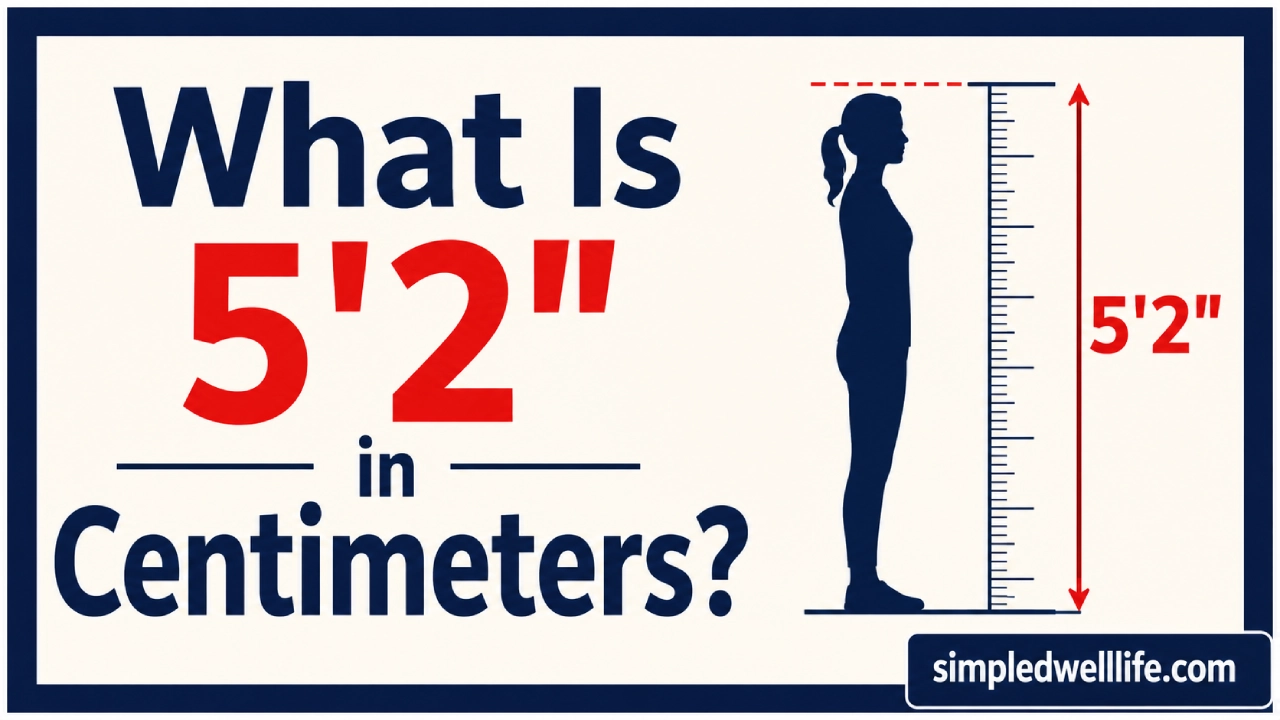
    What Is 5’2″ in Centimeters? Exact Height Conversion Guide

    If you want the quick answer:
    5’2″ = 157.48 centimeters

    That’s the exact conversion from feet and inches to centimeters. In everyday use, people usually round it to 157.5 cm.

    But if you’ve ever wondered how this conversion works, why centimeters are used globally, or how to convert height measurements yourself, this guide will walk you through everything clearly and practically.

    Understanding 5’2″ as a Height Measurement

    The height 5’2″ is written using the feet and inches system, commonly used in the United States.

    Here’s what it means:

    • 5 feet
    • 2 inches

    Since:

    • 1 foot = 12 inches

    You can convert the full height into inches first.

    Step 1: Convert Feet to Inches

    5 × 12 = 60 inches

    Step 2: Add the Remaining Inches

    60 + 2 = 62 inches

    So:
    👉 5’2″ = 62 inches

    The Formula to Convert Inches to Centimeters

    Inches to Centimeters Converter

    Enter a value in inches to instantly convert it into centimeters.

    Result: 0 centimeters

    Formula: centimeters = inches × 2.54

    To convert inches into centimeters, use this standard conversion:

    cm=inches×2.54cm = inches \times 2.54cm=inches×2.54

    Where:

    • cm = centimeters
    • inches = total inches

    Now apply it:

    62 × 2.54 = 157.48 cm

    That’s your exact answer.

    Why Is 1 Inch Equal to 2.54 cm?

    This comes from internationally accepted measurement standards.

    • The inch belongs to the imperial/U.S. customary system
    • The centimeter belongs to the metric system

    The exact relationship was standardized globally to ensure consistency in engineering, science, healthcare, and manufacturing.

    Quick Conversion Shortcut

    If you don’t want to calculate everything manually every time, here’s a simple shortcut:

    👉 Multiply total inches by 2.54

    For 5’2″:

    • 62 × 2.54 = 157.48 cm

    Simple and reliable.

    Feet & Inches vs Centimeters: Key Differences You Should Know

    Understanding the difference between these systems helps avoid confusion.

    FeatureFeet & InchesCentimeters
    SystemImperial/U.S.Metric
    Used inUnited StatesMost countries
    Measurement styleMixed unitsSingle unit
    Example5’2″157.48 cm

    Simple Way to Understand It

    • Feet & inches = traditional U.S. height system
    • Centimeters = global standard measurement

    Is 5’2″ Considered Short or Average?

    This depends on:

    • Country
    • Gender
    • Population averages

    In the United States:

    • 5’2″ is below average for adult men
    • Slightly below average for adult women

    Globally, though, height averages vary significantly.

    The important thing is this:
    👉 Height alone says very little about health, strength, confidence, or presence.

    Why Do People Convert Height to Centimeters?

    This conversion is surprisingly common.

    1. International Travel

    Many countries use centimeters officially.

    2. Medical Records

    Hospitals and healthcare systems often use metric measurements.

    3. Fitness and Sports

    Athlete profiles commonly list height in centimeters.

    4. Online Forms and Applications

    International websites often request height in cm.

    Step-by-Step Method to Convert Any Height

    You can use this method for any feet-and-inches height.

    Example Structure

    1. Convert feet to inches
    2. Add remaining inches
    3. Multiply by 2.54

    Example: 5’2″

    • 5 × 12 = 60
    • 60 + 2 = 62
    • 62 × 2.54 = 157.48 cm

    Common Height Conversion Table

    Feet & InchesCentimeters
    5’0″152.4 cm
    5’1″154.94 cm
    5’2″157.48 cm
    5’3″160.02 cm
    5’4″162.56 cm

    This table helps for quick comparisons.

    Real-Life Example You’ll Relate To

    Imagine filling out an international job application.

    It asks for height in centimeters, but you only know your height as 5’2″.

    Instead of guessing:
    👉 You convert it properly to 157.48 cm

    Now your information stays accurate and professional.

    Common Mistakes to Avoid

    1. Forgetting to Convert Feet into Inches

    You can’t multiply feet directly by 2.54 without converting first.

    2. Using Wrong Inch Totals

    5’2″ is 62 inches—not 52 inches.

    3. Rounding Too Early

    Keep decimals until the final answer.

    4. Mixing Units

    Always confirm whether the measurement is in inches, feet, or centimeters.

    Inches vs Centimeters: Key Difference

    UnitSize
    1 inch2.54 cm
    1 cm0.39 inches

    Centimeters are smaller and more precise, which is why they’re widely used internationally.

    Why the Metric System Uses Centimeters

    The metric system is based on powers of 10, making calculations simpler.

    • 10 mm = 1 cm
    • 100 cm = 1 meter

    This consistency is one reason the metric system is used almost worldwide.

    Frequently Asked Questions (FAQs)

    1. What is 5’2″ in centimeters exactly?

    157.48 cm

    2. Is 5’2″ equal to 157 cm?

    Approximately, yes—but the exact value is 157.48 cm

    3. How do you convert feet and inches to centimeters?

    Convert everything to inches, then multiply by 2.54.

    4. What is the formula for inches to centimeters?

    cm = inches × 2.54

    5. How many inches is 5’2″?

    62 inches

    6. Is 5’2″ short for a woman?

    It depends on the country and population average.

    7. Why do most countries use centimeters?

    Because the metric system is internationally standardized.

    8. Can I round 157.48 cm to 157.5 cm?

    Yes, that’s common in everyday use.

    9. What is 5 feet in centimeters?

    5 feet = 152.4 cm

    10. Is height measured differently worldwide?

    Yes. The U.S. commonly uses feet/inches, while most countries use centimeters.

    11. How do doctors measure height?

    Most medical systems use centimeters.

    12. Is this conversion important?

    Yes, especially for travel, healthcare, sports, and international applications.

    Final Thoughts

    So, what is 5’2″ in centimeters?
    👉 157.48 cm

    It’s a simple conversion once you understand the process:

    • Convert feet to inches
    • Add the remaining inches
    • Multiply by 2.54

    And once you know that system, you can convert almost any height confidently.

    Now here’s a simple question for you:
    When someone tells you their height in feet and inches, can you instantly picture it in centimeters—or does your brain still pause to do the math?

  • How Many Tablespoons Are in 1/3 Cup? Exact Answer & Guide

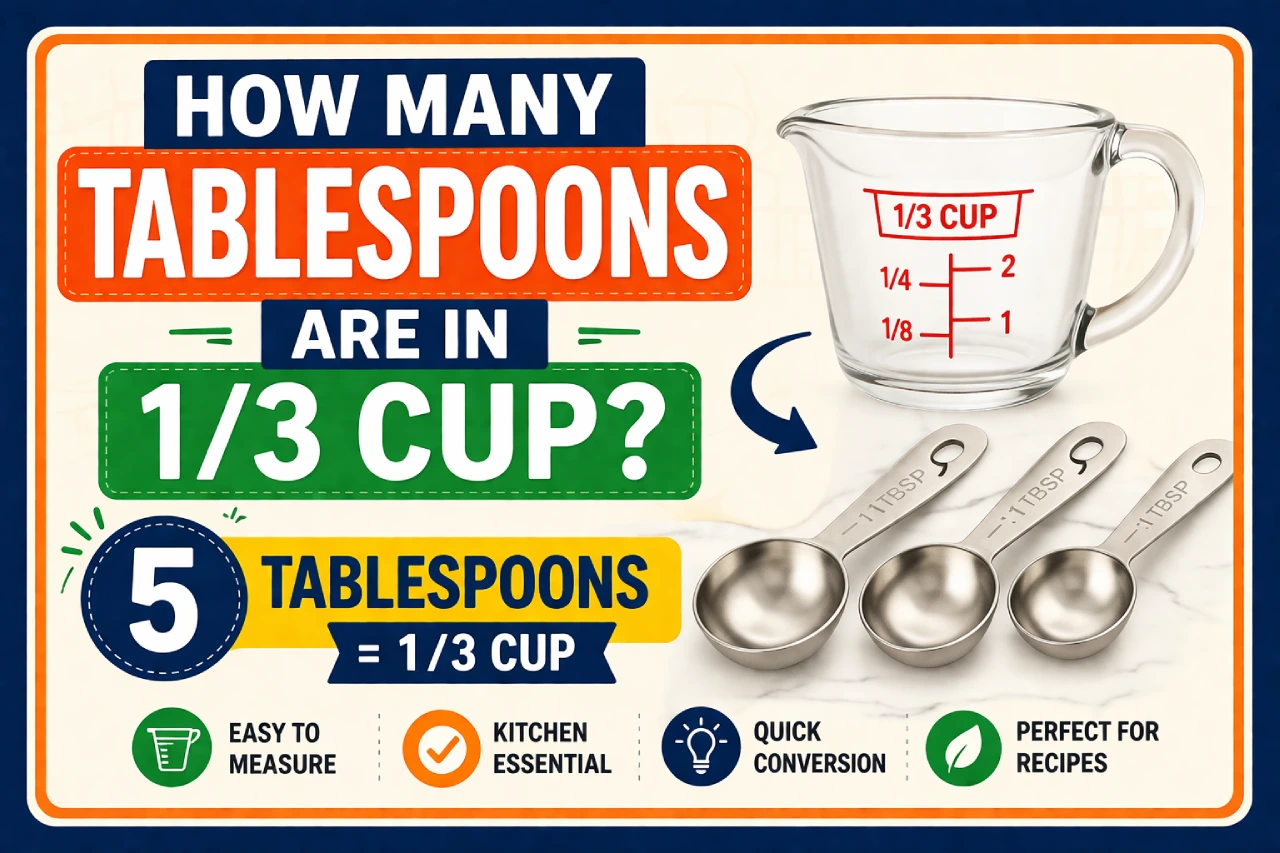
    How Many Tablespoons Are in 1/3 Cup? Exact Answer & Guide

    If you want the quick answer:
    1/3 cup = 5 tablespoons + 1 teaspoon (or about 5.33 tablespoons)

    That’s the exact conversion used in U.S. cooking. Most recipes will either use 5 tablespoons + 1 teaspoon for accuracy or round slightly depending on the situation.

    But if you’ve ever found yourself without a 1/3 cup measuring tool—or just want to understand how these conversions work—this guide will walk you through everything clearly and practically.

    Understanding the Basics of Cup and Tablespoon Measurements

    In the U.S. measurement system:

    • 1 cup = 16 tablespoons
    • 1 tablespoon = 3 teaspoons

    So when you’re converting 1/3 cup, you’re essentially dividing 16 tablespoons into thirds.

    The Formula to Convert Cups to Tablespoons

    Cups to Tablespoons Converter

    Enter a value in cups to quickly convert it into tablespoons. In U.S. measurements, 1 cup = 16 tablespoons.

    The relationship is simple:

    tablespoons=cups×16tablespoons = cups \times 16tablespoons=cups×16

    Now apply it to 1/3 cup:

    (1/3) × 16 = 5.33 tablespoons

    Since we don’t typically measure in decimals in the kitchen, we convert the decimal:

    0.33 tablespoon ≈ 1 teaspoon

    So the final result becomes:

    👉 1/3 cup = 5 tablespoons + 1 teaspoon

    Why Is It 5 Tablespoons + 1 Teaspoon?

    Because:

    • 0.33 tablespoon × 3 teaspoons = ~1 teaspoon

    This gives you a practical, easy-to-measure equivalent without needing decimals.

    Quick Reference Conversion

    Here’s the simplest way to remember it:

    • 1/3 cup = 5 tbsp + 1 tsp
    • OR ≈ 5.33 tablespoons

    Both are correct—the first is just more kitchen-friendly.

    When Do You Need This Conversion?

    This is one of the most common kitchen conversions.

    1. Missing Measuring Cups

    If you don’t have a 1/3 cup, tablespoons can save the day.

    2. Scaling Recipes

    When doubling or halving recipes, conversions become essential.

    3. Precision Cooking

    Some ingredients require more accurate measurement than others.

    4. Baking

    Baking especially benefits from precise conversions.

    Tablespoons vs Cups: Key Differences You Should Know

    Understanding the difference helps avoid mistakes.

    FeatureCupTablespoon
    SizeLarger unitSmaller unit
    1 cup equals16 tablespoons
    PrecisionLess preciseMore precise
    Common useLiquids, bulk ingredientsSmall quantities

    Simple Way to Think About It

    • Cups = big measurements
    • Tablespoons = detailed measurements

    So converting to tablespoons gives you more control.

    Step-by-Step Conversion Method

    Here’s how you can convert any cup value to tablespoons:

    1. Take the number of cups
    2. Multiply by 16
    3. Convert decimals into teaspoons if needed

    Example

    1/3 cup:

    Step 1: 1/3 × 16 = 5.33
    Step 2: 0.33 × 3 = ~1 teaspoon

    Final: 5 tbsp + 1 tsp

    Common Cooking Example

    Let’s say a recipe calls for 1/3 cup of oil, but you only have a tablespoon.

    Instead of guessing:

    👉 Use 5 tablespoons + 1 teaspoon

    Now your recipe stays accurate, and your dish turns out as expected.

    Conversion Table for Similar Measurements

    CupsTablespoons
    1/4 cup4 tbsp
    1/3 cup5 tbsp + 1 tsp
    1/2 cup8 tbsp
    1 cup16 tbsp

    This table is extremely useful in the kitchen.

    Liquid vs Dry Ingredients: Does It Matter?

    The conversion stays the same for both liquid and dry ingredients when using volume measurements.

    However:

    • Liquids are easier to measure accurately
    • Dry ingredients may require leveling for precision

    Common Mistakes to Avoid

    1. Ignoring the Extra Teaspoon

    Many people round 1/3 cup to 5 tablespoons—but that loses accuracy.

    2. Confusing Tablespoons and Teaspoons

    Remember:

    • 1 tablespoon = 3 teaspoons

    3. Using Heaping Measurements

    Always use level tablespoons unless specified.

    4. Mixing Measurement Systems

    Stick to U.S. measurements unless converting fully.

    Quick Shortcut Tip

    👉 Remember this phrase:
    “One-third cup is five and one teaspoon”

    It’s simple, memorable, and accurate.

    Why Precision Matters (Especially in Baking)

    In cooking, small differences might not matter much.

    But in baking:

    • Too much liquid = runny batter
    • Too little = dry texture

    That extra teaspoon can make a difference.

    Real-Life Scenario You’ll Relate To

    You’re halfway through baking cookies, and the recipe calls for 1/3 cup sugar.

    But your 1/3 cup measure is missing.

    Instead of guessing:
    👉 You measure 5 tablespoons + 1 teaspoon

    Result? Perfect cookies—no compromise.

    Frequently Asked Questions (FAQs)

    1. How many tablespoons are in 1/3 cup?

    5 tablespoons + 1 teaspoon

    2. Is 1/3 cup exactly 5 tablespoons?

    No, it’s slightly more—about 5.33 tablespoons

    3. Why add 1 teaspoon?

    Because 0.33 tablespoon equals about 1 teaspoon.

    4. Can I round to 5 tablespoons?

    Yes, but it reduces accuracy slightly.

    5. How many teaspoons are in 1/3 cup?

    16 teaspoons

    6. What is the formula to convert cups to tablespoons?

    tablespoons = cups × 16

    7. Does this work for all ingredients?

    Yes, for volume-based measurements.

    8. Is this conversion used in baking?

    Yes, very commonly.

    9. What if I only have teaspoons?

    1/3 cup = 16 teaspoons

    10. Is this conversion the same worldwide?

    No, cup sizes vary slightly in different countries.

    11. Why do U.S. recipes use cups?

    It’s part of the customary measurement system.

    12. Is precision important for this conversion?

    Yes, especially in baking.

    Final Thoughts

    So, how many tablespoons are in 1/3 cup?
    👉 5 tablespoons + 1 teaspoon

    It’s a small detail—but one that can make a big difference in your cooking.

    Once you understand how these measurements connect, you won’t need to rely on guesswork again.

    Now here’s a simple question for you:
    The next time you’re in the kitchen without a 1/3 cup, will you guess—or measure it perfectly with tablespoons?

  • How Many Grams Are in a Quarter Pound? Exact Answer & Guide

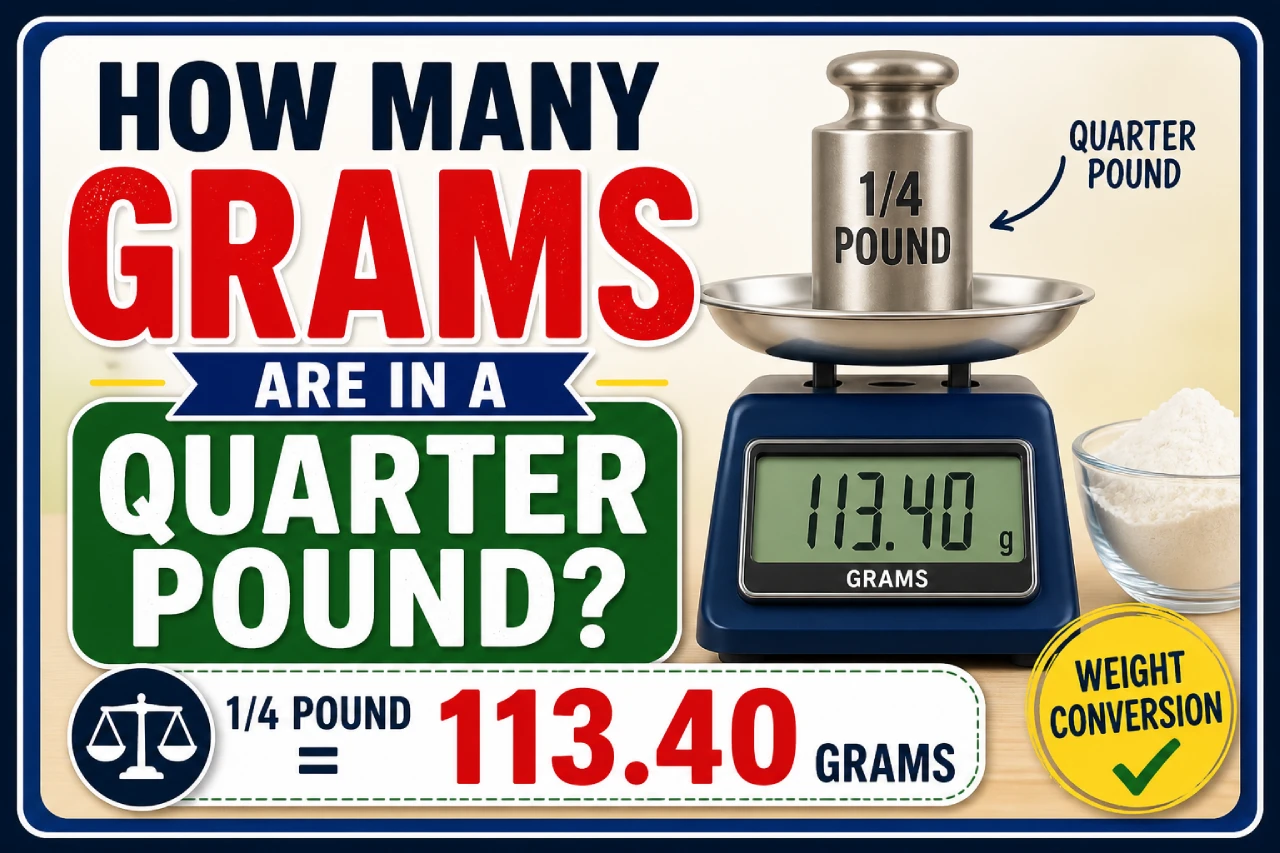
    How Many Grams Are in a Quarter Pound? Exact Answer & Guide

    If you want the quick answer:
    A quarter pound = 113.4 grams (approximately)

    That’s the precise conversion most people use. In everyday situations—especially cooking—it’s often rounded to 113 grams.

    But if you want to understand why that number exists, how to calculate it yourself, and when accuracy really matters, this guide will walk you through everything step by step.

    What Does “Quarter Pound” Mean?

    A quarter pound simply means one-fourth of a pound.

    Since:

    • 1 pound (lb) = 16 ounces
    • A quarter pound = 16 ÷ 4 = 4 ounces

    So when you hear “quarter pound,” think:
    👉 4 ounces
    👉 or 0.25 pounds

    This is a very common measurement in cooking, food packaging, and even restaurant menus (hello, quarter-pound burgers).

    The Exact Conversion to Grams

    Quarter Pound to Grams Converter

    Convert quarter pounds to grams instantly. One quarter pound equals 113.398 grams.

    Result: 0 grams

    Formula: Quarter pounds × 113.398 = grams

    To convert pounds into grams, we use a fixed relationship:

    grams=pounds×453.592grams = pounds \times 453.592grams=pounds×453.592

    Now let’s apply that to a quarter pound:

    0.25 × 453.592 = 113.398 grams

    Rounded:
    👉 113.4 grams

    That’s your exact answer.

    Why 113.4 Grams?

    This number comes from the international standard:

    • 1 pound = 453.592 grams

    So:

    • ¼ pound = 453.592 ÷ 4 = 113.4 grams

    It’s a simple division, but it’s based on globally accepted measurement standards used in science, trade, and cooking.

    Quarter Pound to Grams (Quick Reference)

    Here’s a quick snapshot you can remember:

    • ¼ pound = 113.4 grams
    • ½ pound = 226.8 grams
    • 1 pound = 453.6 grams

    This helps you scale recipes or measurements easily.

    Quarter Pound vs Grams: Key Differences You Should Know

    Understanding the difference between these units makes conversions easier.

    FeaturePound (lb)Gram (g)
    SystemImperialMetric
    Used inUnited StatesWorldwide
    ScaleLarger unitSmaller unit
    Example0.25 lb113.4 g

    Simple Way to Understand It

    • Pounds = bigger units (used in the U.S.)
    • Grams = smaller, precise units (used globally)

    So converting from pounds to grams gives you more precision.

    When Do You Need This Conversion?

    You’ll encounter this more often than you might expect.

    1. Cooking and Baking

    Many international recipes use grams, while U.S. recipes use pounds or ounces.

    2. Food Packaging

    Nutritional labels often show grams.

    3. Grocery Shopping

    Meat and produce may be labeled in pounds, but recipes might require grams.

    4. Fitness and Nutrition

    Tracking food intake often involves grams.

    Real-Life Example You Can Relate To

    Let’s say you’re following a European recipe that calls for 113 grams of ground beef.

    But your grocery store sells meat in pounds.

    Instead of guessing, you know:

    👉 113 grams ≈ ¼ pound

    Now you can measure accurately without stress.

    Quick Conversion Shortcut

    If you don’t want to use a calculator:

    👉 Remember this:
    ¼ pound ≈ 113 grams

    That’s the easiest shortcut.

    Or:
    👉 Multiply pounds by 450 for a rough estimate

    0.25 × 450 = 112.5 grams (very close)

    Common Mistakes to Avoid

    Even simple conversions can go wrong.

    1. Confusing Ounces and Grams

    A quarter pound is 4 ounces, not 4 grams.

    2. Rounding Too Early

    Always round at the end for better accuracy.

    3. Mixing Units

    Don’t mix pounds, ounces, and grams without converting properly.

    4. Using Rough Estimates for Baking

    Precision matters in baking—use exact values when possible.

    Ounces vs Grams for a Quarter Pound

    Since ¼ pound = 4 ounces, let’s convert that:

    • 1 ounce = 28.35 grams
    • 4 ounces = 4 × 28.35 = 113.4 grams

    Same result, different path.

    This is helpful if your kitchen scale uses ounces instead of pounds.

    Conversion Table for Similar Values

    PoundsGrams
    0.25 lb113.4 g
    0.50 lb226.8 g
    0.75 lb340.2 g
    1 lb453.6 g

    This helps you quickly scale recipes.

    Quarter Pound in Popular Culture

    The term “quarter pound” is widely recognized thanks to food items like the famous burger from McDonald’s.

    A “Quarter Pounder” refers to a burger made with a ¼ pound (pre-cooked weight) beef patty.

    That’s roughly:
    👉 113 grams of meat

    It’s a simple example of how this conversion shows up in everyday life.

    Why the Metric System Uses Grams

    The metric system is based on powers of 10, making it easier for calculations.

    • 1 kilogram = 1,000 grams
    • 1 gram = 1/1,000 of a kilogram

    This consistency is why most countries prefer grams over pounds.

    Frequently Asked Questions (FAQs)

    1. How many grams are in a quarter pound exactly?

    113.4 grams

    2. Is a quarter pound 100 grams?

    No, it’s slightly more—about 113 grams.

    3. How many ounces are in a quarter pound?

    4 ounces

    4. What is the formula to convert pounds to grams?

    grams = pounds × 453.592

    5. Can I round 113.4 grams to 113 grams?

    Yes, for most cooking purposes.

    6. Why do recipes use grams instead of pounds?

    Grams provide more precise measurements.

    7. Is ¼ pound the same as 113 grams?

    Yes, approximately.

    8. How do you convert grams back to pounds?

    Divide by 453.592.

    9. Is a quarter pound a lot of food?

    It depends, but it’s a standard serving size for items like burgers.

    10. What is half a pound in grams?

    226.8 grams

    11. Do chefs prefer grams or pounds?

    Most professional chefs prefer grams for accuracy.

    12. Is this conversion important in everyday life?

    Yes, especially in cooking and nutrition.

    Final Thoughts

    A quarter pound equals 113.4 grams, and once you understand that relationship, conversions become effortless.

    Whether you’re cooking, shopping, or tracking nutrition, knowing this simple conversion helps you stay accurate and confident.

    Just remember:
    👉 ¼ pound ≈ 113 grams

    Now here’s a simple question for you:
    When you see “¼ pound” on a label or menu, do you picture the exact amount in grams—or is it still just a rough estimate in your mind?

  • 118 lbs to kg – Convert 118 Pounds to Kilograms Easily

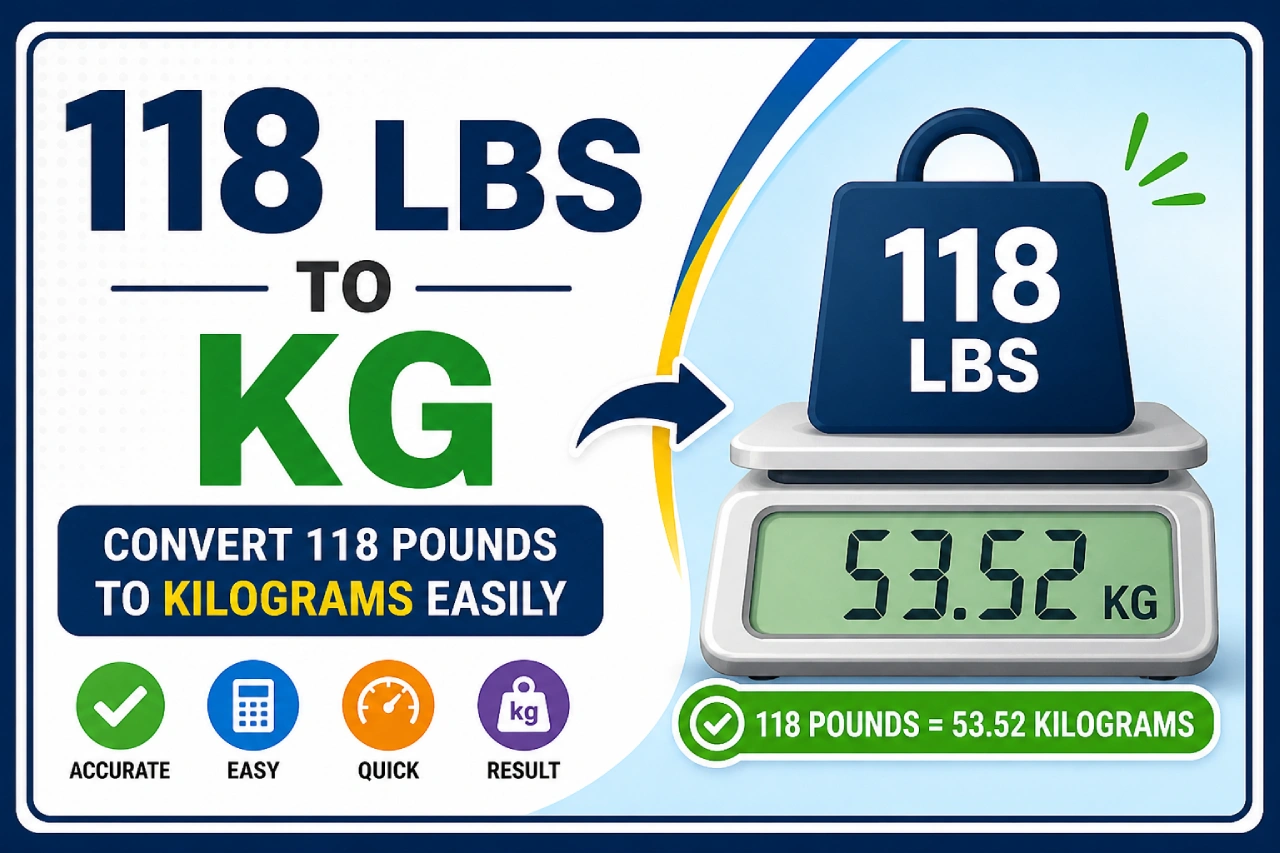
    118 lbs to kg – Convert 118 Pounds to Kilograms Easily

    If you want the quick answer:
    118 lbs = 53.52 kg (approximately)

    That’s the exact conversion rounded to two decimal places. But if you want to understand how this works, how to do it yourself, and when it actually matters, this guide will walk you through everything clearly.

    What Does 118 lbs to kg Mean?

    When you convert 118 pounds (lbs) to kilograms (kg), you’re switching between two different systems of measurement:

    • Pounds (lbs) → used mainly in the United States
    • Kilograms (kg) → used in most other countries and in science

    Both measure mass (or weight in everyday language), but they use different scales.

    So this conversion is all about translating a familiar U.S. number into the global standard.

    The Formula to Convert Pounds to Kilograms

    lbs to kg Converter

    Use this simple pounds to kilograms converter to quickly convert weight from lbs to kg. Just enter a value in pounds, and the tool will instantly show the result in kilograms.

    Result: 0 kg

    lbs to kg Formula

    To convert pounds to kilograms, use this formula:

    kg = lbs × 0.45359237

    Example Conversion

    If you want to convert 118 lbs to kg:

    118 × 0.45359237 = 53.52 kg

    Common lbs to kg Conversions

    Pounds Kilograms
    100 lbs45.36 kg
    110 lbs49.90 kg
    118 lbs53.52 kg
    120 lbs54.43 kg
    150 lbs68.04 kg
    200 lbs90.72 kg

    FAQs About lbs to kg Conversion

    How do you convert lbs to kg?

    Multiply the weight in pounds by 0.45359237 to get the weight in kilograms.

    What is 1 lb in kg?

    1 pound is equal to approximately 0.4536 kilograms.

    What is 118 lbs in kg?

    118 lbs is equal to approximately 53.52 kg.

    The conversion between pounds and kilograms is based on a fixed relationship:

    kg=lbs×0.453592kg = lbs \times 0.453592kg=lbs×0.453592

    Where:

    • kg = kilograms
    • lbs = pounds

    This constant (0.453592) is what makes the conversion precise.

    Step-by-Step Conversion for 118 lbs

    Let’s break it down so you can do it yourself anytime.

    Step 1: Take the value in pounds
    118 lbs

    Step 2: Multiply by 0.453592
    118 × 0.453592 = 53.523856

    Step 3: Round the result
    ≈ 53.52 kg

    That’s your final answer.

    Quick Conversion Shortcut

    If you don’t want to calculate every time, here’s a simple trick:

    👉 Divide by 2.2

    118 ÷ 2.2 ≈ 53.64 kg

    This method is slightly less precise but works well for quick estimates.

    Why Does This Conversion Work?

    This conversion is based on international measurement standards.

    • 1 pound = 0.453592 kilograms
    • 1 kilogram = 2.20462 pounds

    These values are fixed and used globally in science, healthcare, and engineering.

    Pounds vs Kilograms: Key Differences You Should Know

    Understanding the difference helps avoid confusion.

    FeaturePounds (lbs)Kilograms (kg)
    SystemImperialMetric
    Used inUnited StatesMost countries worldwide
    Unit typeNon-SISI base unit
    Conversion1 lb = 0.453592 kg1 kg = 2.20462 lbs

    Simple Way to Understand It

    • Pounds = U.S. everyday system
    • Kilograms = global scientific standard

    Is 118 lbs a Healthy Weight?

    This depends entirely on factors like:

    • Height
    • Age
    • Gender
    • Body composition

    For example:

    • For someone shorter, 118 lbs may be perfectly healthy
    • For someone taller, it might be underweight

    To evaluate properly, you’d typically use BMI (Body Mass Index) or consult a healthcare professional.

    When Do You Need to Convert lbs to kg?

    This conversion comes up more often than you might think.

    1. Fitness and Health

    Gym programs and medical records often use kilograms.

    2. Travel

    Many countries use kilograms for baggage weight limits.

    3. Science and Education

    Kilograms are the standard unit in scientific calculations.

    4. Online Shopping

    International products often list weight in kg.

    Common Mistakes to Avoid

    Even simple conversions can go wrong.

    1. Using the Wrong Conversion Factor

    Always use 0.453592, not rough guesses.

    2. Confusing Pounds with Kilograms

    118 lbs is not the same as 118 kg—that’s a huge difference.

    3. Rounding Too Early

    Round only at the final step for accuracy.

    4. Mixing Units

    Make sure you know whether a value is in lbs or kg before converting.

    Conversion Table for Nearby Values

    Here’s a quick reference around 118 lbs:

    Pounds (lbs)Kilograms (kg)
    110 lbs49.90 kg
    115 lbs52.16 kg
    118 lbs53.52 kg
    120 lbs54.43 kg
    125 lbs56.70 kg

    This helps if you’re working with similar values.

    Real-Life Example You Can Relate To

    Let’s say you’re filling out a medical form while traveling abroad.

    It asks for your weight in kilograms, but you only know your weight is 118 lbs.

    Instead of guessing, you convert:

    118 lbs → 53.52 kg

    Now you can enter accurate information confidently.

    lbs to kg vs Other Conversions

    Once you understand this conversion, others become easier:

    • lbs → grams
    • kg → pounds
    • ounces → kilograms

    They all follow fixed relationships, just like this one.

    Frequently Asked Questions (FAQs) About 118 lbs to kg

    1. What is 118 lbs in kg exactly?

    118 lbs = 53.52 kg (approximately)

    2. What is the formula to convert lbs to kg?

    kg = lbs × 0.453592

    3. Can I divide by 2.2 instead?

    Yes, for quick estimates.

    4. Is 118 lbs equal to 54 kg?

    No, it’s slightly less—about 53.52 kg

    5. Why do we use 0.453592?

    It’s the internationally accepted conversion factor.

    6. Is pounds or kilograms more accurate?

    Both are accurate—they just use different systems.

    7. Where is kg used more?

    Globally, especially in science and healthcare.

    8. Is 118 lbs a normal weight?

    It depends on height and body composition.

    9. How do you convert kg back to lbs?

    Multiply by 2.20462

    10. What is 120 lbs in kg?

    120 lbs ≈ 54.43 kg

    11. Do doctors use kg or lbs?

    Most medical systems use kilograms.

    12. Is this conversion important?

    Yes, especially for health, travel, and global communication.

    Final Thoughts

    Converting 118 lbs to kilograms is simple once you know the formula—but more importantly, it helps you move between two systems used around the world.

    Just remember:
    👉 Multiply by 0.453592
    👉 Or divide by 2.2 for quick estimates

    Now here’s a simple question for you:
    When you see your weight in pounds, can you instantly picture it in kilograms—or does it still feel like a completely different number?

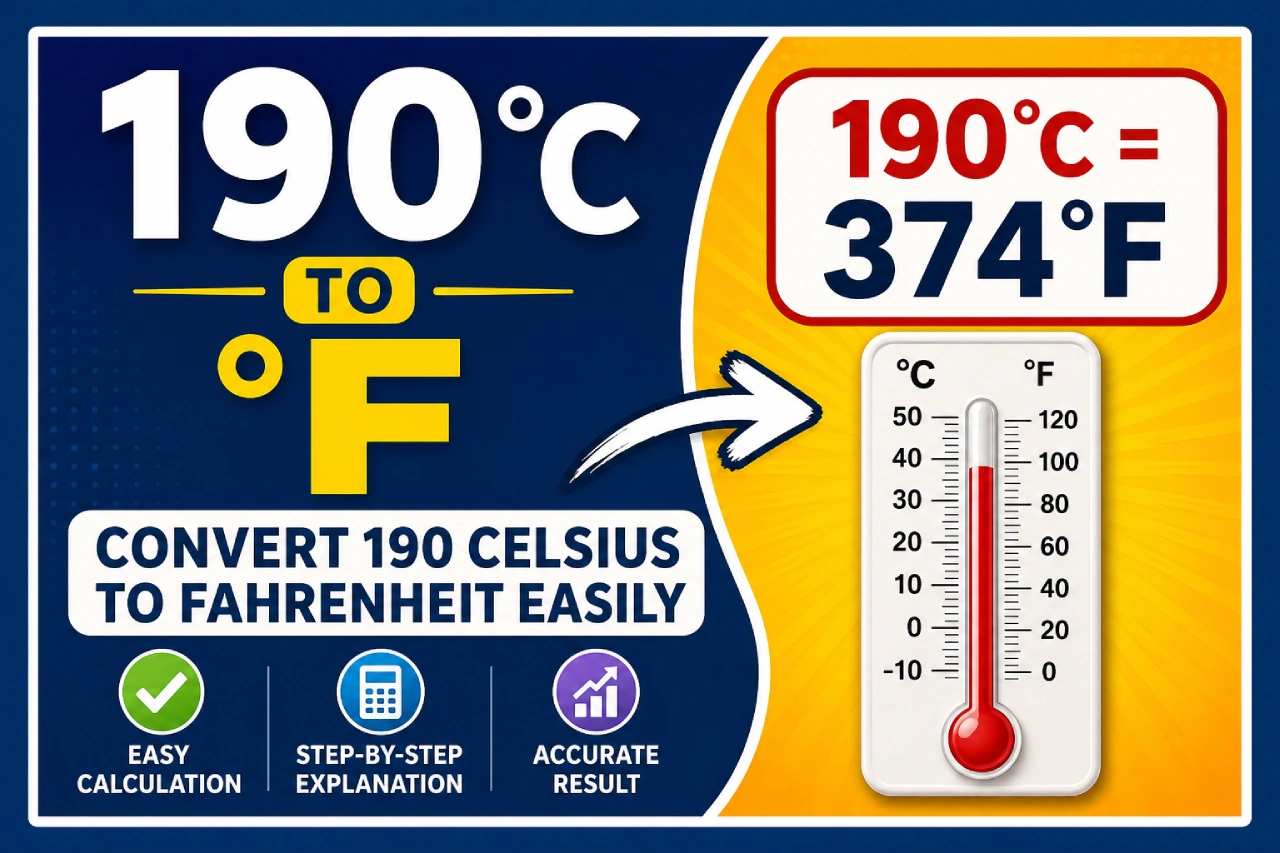
  • 190°C to °F – Convert 190 Celsius to Fahrenheit Easily

    190°C to °F – Convert 190 Celsius to Fahrenheit Easily

    If you want the quick answer:
    190°C = 374°F

    That’s the exact conversion. But if you cook, bake, or work with temperature conversions regularly, understanding how and why this works will save you time and prevent mistakes. Let’s break it down in a way that actually sticks.

    What Does 190°C Mean in Fahrenheit?

    Temperature scales vary by region. In the U.S., recipes typically use Fahrenheit, while many international recipes use Celsius.

    So when you see 190°C, you’re looking at a moderately hot oven temperature—commonly used for baking.

    Converted into Fahrenheit, that becomes:

    👉 190°C = 374°F

    In practical terms, most ovens round this to 375°F, which is a very common baking temperature.

    The Formula to Convert Celsius to Fahrenheit

    Celsius to Fahrenheit Converter

    Quickly convert Celsius to Fahrenheit using the formula: °F = (°C × 9/5) + 32.

    Enter a Celsius value to see the Fahrenheit result.
    Formula: Fahrenheit = (Celsius × 9/5) + 32

    The conversion is based on a standard mathematical relationship between the two temperature scales.

    F=(C×95)+32F = (C \times \frac{9}{5}) + 32F=(C×59​)+32

    Where:

    • F = Fahrenheit
    • C = Celsius

    Step-by-Step Conversion

    Let’s apply the formula to 190°C:

    Step 1: Multiply by 9/5
    190 × 9/5 = 342

    Step 2: Add 32
    342 + 32 = 374°F

    That’s how you get the exact result.

    Why Does 190°C Equal 374°F?

    This comes down to how the two scales are structured:

    • Water freezes at 0°C = 32°F
    • Water boils at 100°C = 212°F

    The spacing between degrees is different, which is why we need a formula instead of a simple multiplier.

    Is 190°C the Same as 375°F?

    Not exactly—but it’s close enough for cooking.

    • Exact conversion: 374°F
    • Rounded oven setting: 375°F

    Most ovens don’t allow you to set 374°F precisely, so rounding is completely acceptable.

    👉 In real-world cooking, 190°C ≈ 375°F

    What Is 190°C Used For in Cooking?

    This temperature is extremely common in baking and roasting.

    Common Uses

    • Baking cakes and cupcakes
    • Roasting vegetables
    • Cooking casseroles
    • Baking cookies
    • Roasting chicken

    It’s considered a moderate oven temperature, giving you a balance between even cooking and good browning.

    190°C vs Other Oven Temperatures

    Here’s how 190°C compares to other common temperatures:

    CelsiusFahrenheitUse
    160°C320°FLow baking
    180°C356°FModerate baking
    190°C374°FStandard baking
    200°C392°FHot baking
    220°C428°FHigh heat roasting

    This helps you adjust recipes more confidently.

    Quick Conversion Trick (Without a Calculator)

    If you don’t want to use the formula every time, here’s a quick trick:

    👉 Multiply by 2, then add 30

    Let’s try it:

    190 × 2 = 380
    380 + 30 = 410°F

    That’s not exact—but it gives a rough estimate.

    For better accuracy:
    👉 Multiply by 2, then subtract 10%

    190 × 2 = 380
    10% of 380 = 38
    380 − 38 ≈ 342 + 32 = 374°F (closer range)

    Still, for precise cooking, stick with the actual formula.

    Celsius vs Fahrenheit: Key Differences You Should Know

    Understanding the difference helps avoid confusion.

    FeatureCelsius (°C)Fahrenheit (°F)
    Used inMost of the worldUnited States
    Freezing point0°C32°F
    Boiling point100°C212°F
    Scale typeMetric-basedNon-metric

    Simple Way to Think About It

    • Celsius = scientific and global standard
    • Fahrenheit = everyday U.S. cooking and weather

    Common Mistakes to Avoid

    Even a simple conversion can go wrong if you’re not careful.

    1. Forgetting to Add 32

    Multiplying alone isn’t enough—you must add 32.

    2. Mixing Up the Formula

    Make sure you’re converting in the right direction:

    • C → F uses one formula
    • F → C uses another

    3. Not Rounding for Cooking

    In cooking, exact numbers matter less than practicality.

    4. Using Rough Estimates for Baking

    For baking, precision matters—always use the exact conversion.

    Real-Life Example You Can Relate To

    Let’s say you’re following a European cake recipe that says:

    👉 Bake at 190°C

    But your oven uses Fahrenheit.

    Instead of guessing, you convert:

    190°C = 374°F → set oven to 375°F

    Now your cake bakes exactly as intended—no undercooking or burning.

    Frequently Asked Questions (FAQs) About 190°C to °F

    1. What is 190°C in Fahrenheit?

    190°C = 374°F

    2. Can I use 375°F instead of 190°C?

    Yes. 375°F is the closest standard oven setting.

    3. What is the formula to convert Celsius to Fahrenheit?

    F = (C × 9/5) + 32

    4. Is 190°C a high oven temperature?

    No, it’s considered moderate.

    5. What foods cook at 190°C?

    Cakes, cookies, roasted vegetables, and chicken.

    6. Why do recipes use different temperature units?

    Different countries use different measurement systems.

    7. Is Celsius more accurate than Fahrenheit?

    Both are accurate—they just use different scales.

    8. What happens if I use the wrong temperature?

    Food may cook too quickly, too slowly, or unevenly.

    9. Can I estimate Celsius to Fahrenheit easily?

    Yes, but estimates are less accurate than formulas.

    10. What is 180°C in Fahrenheit?

    180°C = 356°F

    11. What is 200°C in Fahrenheit?

    200°C = 392°F

    12. Do ovens match exact temperatures?

    Not always—small variations are normal.

    Final Thoughts

    Converting 190°C to Fahrenheit is simple once you know the formula—but the real value comes from understanding how to apply it in everyday cooking.

    Whether you’re baking a cake or roasting vegetables, knowing that 190°C ≈ 375°F ensures your results stay consistent and reliable.

    Now here’s a simple question for you:
    When you see a temperature like 190°C, do you instantly know how hot that feels—or do you still need to convert it in your head every time?

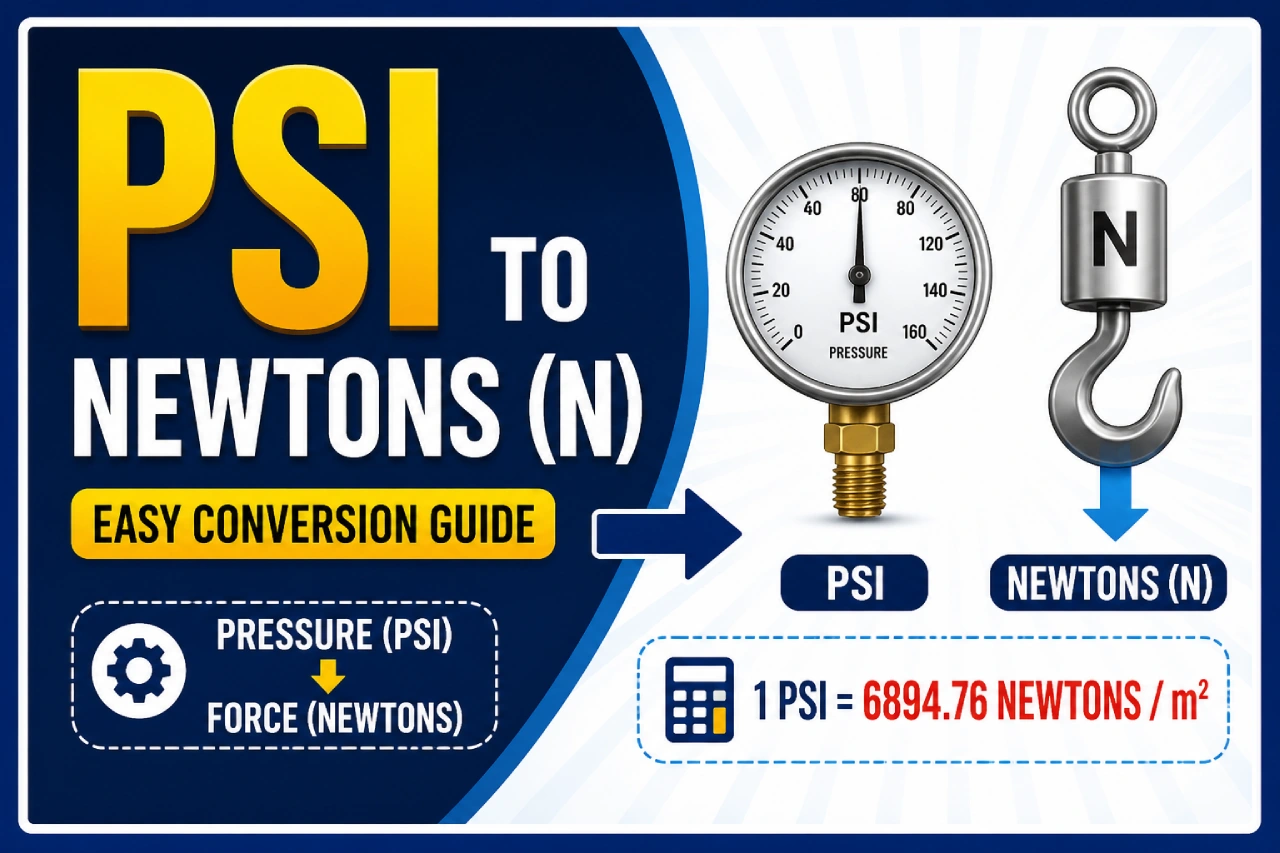
  • PSI to Newtons (N) – Formula, Chart & Step-by-Step Method

    PSI to Newtons (N) – Formula, Chart & Step-by-Step Method

    If you want a quick, direct answer:
    You can’t convert PSI directly to newtons without knowing the area.

    That’s because PSI (pounds per square inch) measures pressure, while newtons (N) measure force.

    To convert PSI to newtons, you must use this relationship:
    👉 Force (N) = Pressure (PSI) × Area (in²) × 4.44822

    Once you know the area, the conversion becomes straightforward. Let’s break it down clearly.

    What Does PSI to Newtons Mean?

    Before jumping into formulas, it’s important to understand what you’re converting.

    • PSI (pounds per square inch) = pressure
    • Newton (N) = force

    Pressure tells you how much force is applied over a specific area. Force tells you the total push or pull.

    So when converting PSI to newtons, you’re essentially asking:
    👉 “Given this pressure, how much total force is being applied over a surface?”

    The Core Concept Behind the Conversion

    This conversion is based on a fundamental physics principle:

    Pressure = Force ÷ Area

    Rearranging it gives:

    F=P×AF = P \times AF=P×A

    Where:

    • F = force (newtons)
    • P = pressure
    • A = area

    This is why area is essential—you can’t calculate force without it.

    The PSI to Newtons Formula

    PSI to Newtons Converter

    Use this PSI to Newtons calculator to convert pressure in pounds per square inch into force in newtons. Enter the PSI value and the surface area in square inches to get the result instantly.

    Result will appear here.

    Formula: Newtons = PSI × Area in in² × 4.44822

    To convert PSI into newtons, you need to account for unit conversion:

    • 1 pound-force (lbf) = 4.44822 newtons
    • PSI = pounds per square inch

    So the full formula becomes:

    Force (N) = PSI × Area (in²) × 4.44822

    Step-by-Step Conversion Method

    Here’s a simple method you can follow every time:

    1. Identify the pressure in PSI
    2. Identify the area in square inches
    3. Multiply PSI × area
    4. Multiply the result by 4.44822

    Example

    Convert 50 PSI applied over 10 in² into newtons:

    Step 1: 50 × 10 = 500
    Step 2: 500 × 4.44822 = 2,224.11 N

    Final Answer: 2,224.11 newtons

    Quick Conversion Examples

    Let’s look at a few more examples for clarity.

    • 30 PSI over 5 in² → 667.23 N
    • 100 PSI over 2 in² → 889.64 N
    • 75 PSI over 8 in² → 2,668.93 N

    Notice how the force changes depending on the area—even if PSI stays the same.

    Why Area Matters So Much

    This is where most confusion happens.

    Imagine:

    • Pressing your finger on a table → small area, low force
    • Standing on the table → larger area, higher force

    Even if the pressure is the same, the total force changes with area.

    That’s why PSI alone isn’t enough.

    PSI vs Newtons: Key Differences You Should Know

    Understanding the difference helps avoid major mistakes.

    FeaturePSINewton (N)
    What it measuresPressureForce
    Depends on area?YesNo
    Unit typeDerived pressure unitSI force unit
    Common useTire pressure, hydraulicsPhysics, engineering

    Simple Way to Understand It

    • PSI = how concentrated the force is
    • Newton = total force applied

    When Do You Convert PSI to Newtons?

    This conversion shows up in many real-world situations.

    Engineering and Design

    Used to calculate load on surfaces and components.

    Hydraulics

    Helps determine force generated by hydraulic systems.

    Automotive Applications

    Tire pressure vs contact force calculations.

    Manufacturing

    Used in material stress and machine design.

    Common Mistakes to Avoid

    Even professionals sometimes get this wrong.

    1. Ignoring Area

    This is the biggest mistake. You cannot convert PSI to newtons without area.

    2. Confusing PSI with Force

    PSI is not force—it’s pressure.

    3. Using Wrong Conversion Factor

    Always use 4.44822 to convert pounds-force to newtons.

    4. Mixing Units

    Make sure area is in square inches, not cm² or m² (unless converted properly).

    Shortcut Tip for Quick Estimates

    If you need a rough estimate:

    👉 Use 4.45 instead of 4.44822

    This simplifies mental math without significant loss of accuracy.

    PSI to Newtons vs Other Conversions

    This conversion is slightly different from others because it involves two variables:

    • Pressure (PSI)
    • Area (in²)

    Most conversions only involve one value, which is why this one feels trickier.

    Real-Life Example You Can Relate To

    Let’s say you have a hydraulic press applying 100 PSI over a surface of 20 square inches.

    Force = 100 × 20 × 4.44822
    Force = 8,896.44 N

    That’s a significant amount of force—enough for heavy-duty applications.

    Frequently Asked Questions (FAQs) About PSI to Newtons

    1. Can you convert PSI directly to newtons?

    No. You need the area to calculate force.

    2. What is the formula for PSI to newtons?

    Force (N) = PSI × Area (in²) × 4.44822

    3. Why do I need area for this conversion?

    Because pressure is force distributed over an area.

    4. What is 1 PSI in newtons?

    It depends on area.
    For 1 in²: 1 PSI ≈ 4.44822 N

    5. How many newtons is 100 PSI?

    Depends on area.
    Example: Over 1 in² → 444.82 N

    6. What is the difference between PSI and newtons?

    PSI measures pressure; newtons measure force.

    7. Where is this conversion used?

    Engineering, hydraulics, automotive systems, and manufacturing.

    8. Can I use metric units instead?

    Yes, but you’ll need to convert PSI to pascals first.

    9. What happens if area increases?

    Force increases proportionally.

    10. Is PSI an SI unit?

    No, PSI is not part of the SI system.

    11. How do you convert PSI to pascals first?

    1 PSI ≈ 6,894.76 Pa

    12. Is this conversion important in real life?

    Yes, especially in engineering and mechanical systems.

    Final Thoughts

    PSI to newtons isn’t a simple one-step conversion—and that’s exactly why understanding it matters.

    Once you remember this core idea—force = pressure × area—everything becomes clear.

    You stop memorizing formulas and start understanding how pressure actually turns into force in the real world.

    Now here’s a simple question for you:
    When you see a pressure value in PSI, do you picture the actual force behind it—or is it still just a number on a gauge?

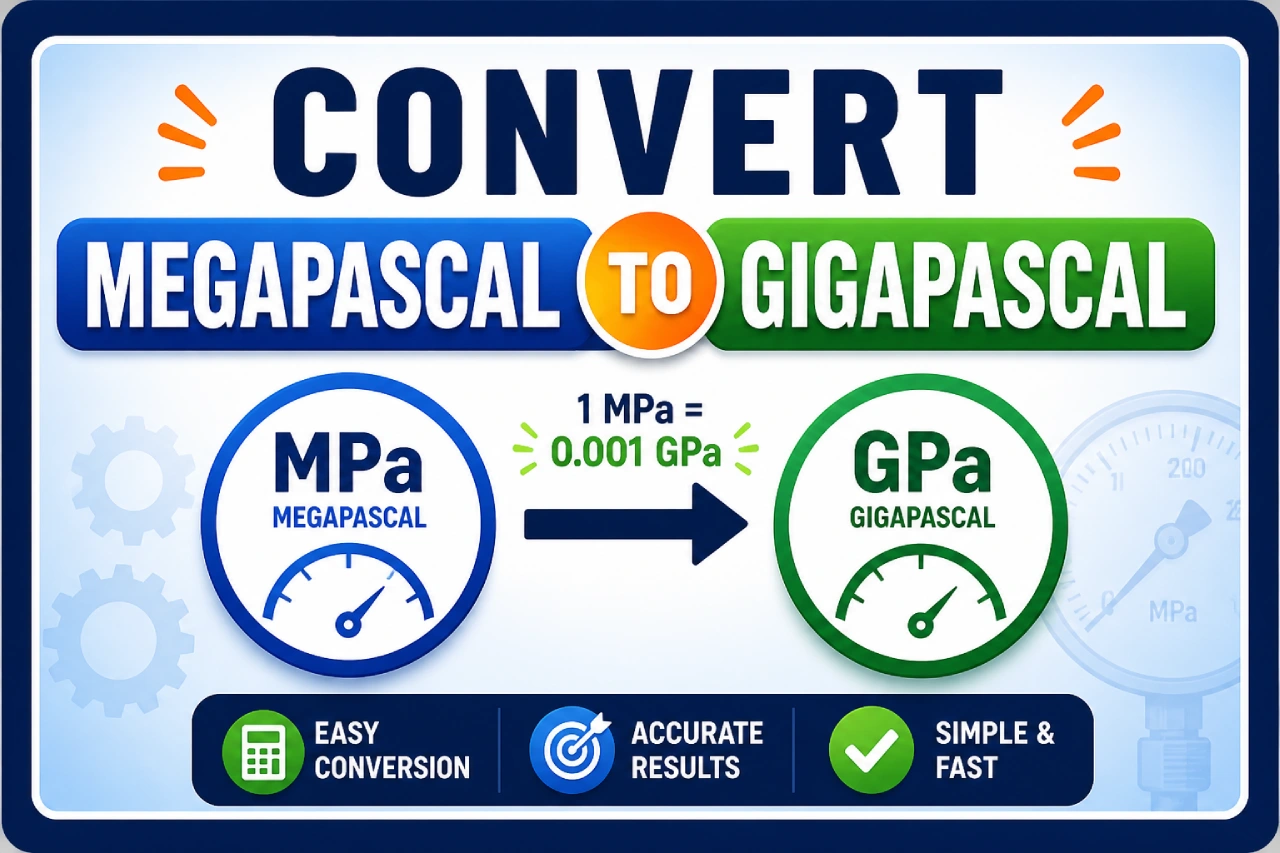
  • Convert Megapascal to Gigapascal – Simple MPa to GPa Guide

    Convert Megapascal to Gigapascal – Simple MPa to GPa Guide

    If you want a quick, direct answer:
    1 megapascal (MPa) = 0.001 gigapascal (GPa)

    So, to convert megapascal to gigapascal, simply divide by 1,000 (or multiply by 0.001).

    That’s the short version. But if you want to truly understand why this works, how to apply it correctly, and where it shows up in real-world scenarios, this guide will walk you through everything step by step.

    What Does “Megapascal to Gigapascal” Mean?

    Before jumping into formulas, let’s clarify what we’re actually converting.

    Both megapascal (MPa) and gigapascal (GPa) are units of pressure or stress in the metric system. They are based on the Pascal (Pa), which is the SI unit of pressure.

    • 1 Pascal (Pa) = 1 newton per square meter
    • Megapascal (MPa) = 1,000,000 pascals
    • Gigapascal (GPa) = 1,000,000,000 pascals

    So when you convert MPa to GPa, you’re moving from a million-scale unit to a billion-scale unit.

    The Conversion Formula

    Megapascal to Gigapascal Converter

    Enter a value in megapascals (MPa) to instantly convert it to gigapascals (GPa).

    Formula: 1 MPa = 0.001 GPa

    The relationship between MPa and GPa is straightforward:

    1 MPa=0.001 GPa1\ \text{MPa} = 0.001\ \text{GPa}1 MPa=0.001 GPa

    Practical Formula

    GPa = MPa ÷ 1,000
    or
    GPa = MPa × 0.001

    That’s all you need.

    Quick Conversion Examples

    Let’s make this practical.

    • 1 MPa → 0.001 GPa
    • 10 MPa → 0.01 GPa
    • 50 MPa → 0.05 GPa
    • 100 MPa → 0.1 GPa
    • 500 MPa → 0.5 GPa
    • 1,000 MPa → 1 GPa

    Once you see the pattern, it becomes easy to convert mentally.

    Why Divide by 1,000?

    This comes from how the metric system is structured.

    • Mega (M) = 10⁶
    • Giga (G) = 10⁹

    So:

    10⁶ ÷ 10⁹ = 10⁻³ = 0.001

    That’s why converting from MPa to GPa always involves dividing by 1,000.

    When Should You Convert MPa to GPa?

    You’ll commonly use this conversion in fields where pressure and stress are critical.

    1. Engineering and Construction

    Engineers often work with material strength in MPa but switch to GPa for larger-scale comparisons.

    2. Material Science

    Properties like elasticity and tensile strength are often expressed in GPa for stronger materials.

    3. Mechanical Design

    Stress analysis in machines may involve both MPa and GPa depending on scale.

    4. Academic and Research Work

    Students and researchers frequently convert between these units in physics and engineering problems.

    MPa vs GPa: Key Differences You Should Know

    Understanding the difference helps avoid confusion.

    FeatureMegapascal (MPa)Gigapascal (GPa)
    Value1,000,000 Pa1,000,000,000 Pa
    ScaleMillion levelBillion level
    Power of 1010⁶10⁹
    Typical UseEveryday engineering stressHigh-strength materials

    Simple Way to Understand It

    • MPa = smaller unit (million level)
    • GPa = larger unit (billion level)

    So:
    👉 1 GPa = 1,000 MPa

    That’s the key relationship.

    Step-by-Step Conversion Method

    Here’s a reliable method you can follow every time:

    1. Take the value in MPa
    2. Divide by 1,000
    3. Convert the unit to GPa

    Example

    Convert 250 MPa to GPa:

    Step 1: 250 MPa
    Step 2: 250 ÷ 1,000 = 0.25
    Step 3: Answer = 0.25 GPa

    Common MPa to GPa Conversion Table

    MPaGPa
    1 MPa0.001 GPa
    10 MPa0.01 GPa
    50 MPa0.05 GPa
    100 MPa0.1 GPa
    500 MPa0.5 GPa
    1,000 MPa1 GPa

    This table is useful for quick reference.

    Real-Life Applications

    Let’s connect this to real-world scenarios.

    Material Strength

    Steel typically has strength values in hundreds of MPa, while advanced materials may be expressed in GPa.

    Construction Projects

    Engineers use MPa for concrete strength but may use GPa for structural comparisons.

    Automotive and Aerospace

    High-performance materials are often evaluated in GPa.

    Manufacturing

    Stress and pressure calculations frequently require switching between these units.

    Common Mistakes to Avoid

    Even though the conversion is simple, mistakes still happen.

    1. Multiplying Instead of Dividing

    When converting from MPa to GPa, always divide by 1,000.

    2. Confusing MPa with Pa

    Remember:

    • MPa = million pascals
    • GPa = billion pascals

    3. Misplacing Decimal Points

    Small decimal errors can lead to large mistakes in engineering calculations.

    4. Ignoring Units

    Always include units (MPa or GPa) to avoid confusion.

    Shortcut Tip for Quick Conversion

    👉 Just move the decimal point three places to the left.

    Example:

    • 300 MPa → 0.3 GPa
    • 750 MPa → 0.75 GPa

    Fast and accurate.

    MPa to GPa vs Other Conversions

    Once you understand this, other metric conversions become easier:

    • kPa → MPa
    • MPa → Pa
    • GPa → MPa

    They all follow the same power-of-10 system.

    Frequently Asked Questions (FAQs) About MPa to GPa Conversion

    1. How do you convert MPa to GPa quickly?

    Divide the value in MPa by 1,000.
    Example: 100 MPa = 0.1 GPa

    2. What is the formula for MPa to GPa conversion?

    GPa = MPa ÷ 1,000

    3. Is 1 MPa equal to 0.001 GPa?

    Yes.
    1 MPa = 0.001 GPa

    4. Why do we divide by 1,000?

    Because giga is 1,000 times larger than mega.

    5. Can I just move the decimal point?

    Yes. Move it three places left.

    6. What is 500 MPa in GPa?

    500 ÷ 1,000 = 0.5 GPa

    7. Where is MPa to GPa conversion used?

    In engineering, material science, construction, and physics.

    8. What is the difference between MPa and GPa?

    MPa is million-level pressure; GPa is billion-level pressure.

    9. Is GPa always bigger than MPa?

    Yes.
    1 GPa = 1,000 MPa

    10. How do you convert GPa back to MPa?

    Multiply by 1,000.
    Example: 2 GPa = 2,000 MPa

    11. Is MPa a unit of pressure?

    Yes, it measures pressure or stress.

    12. Why do engineers use GPa?

    Because it simplifies working with very large stress values.

    Final Thoughts

    Converting megapascal to gigapascal is simple once you understand the relationship:
    divide by 1,000 or multiply by 0.001.

    But more importantly, this conversion helps you think in terms of scale—moving from everyday engineering values to high-strength material analysis.

    Now here’s a simple question for you:
    When you see a value in MPa, do you instantly recognize how it compares on the GPa scale—or does it still feel like just another number?